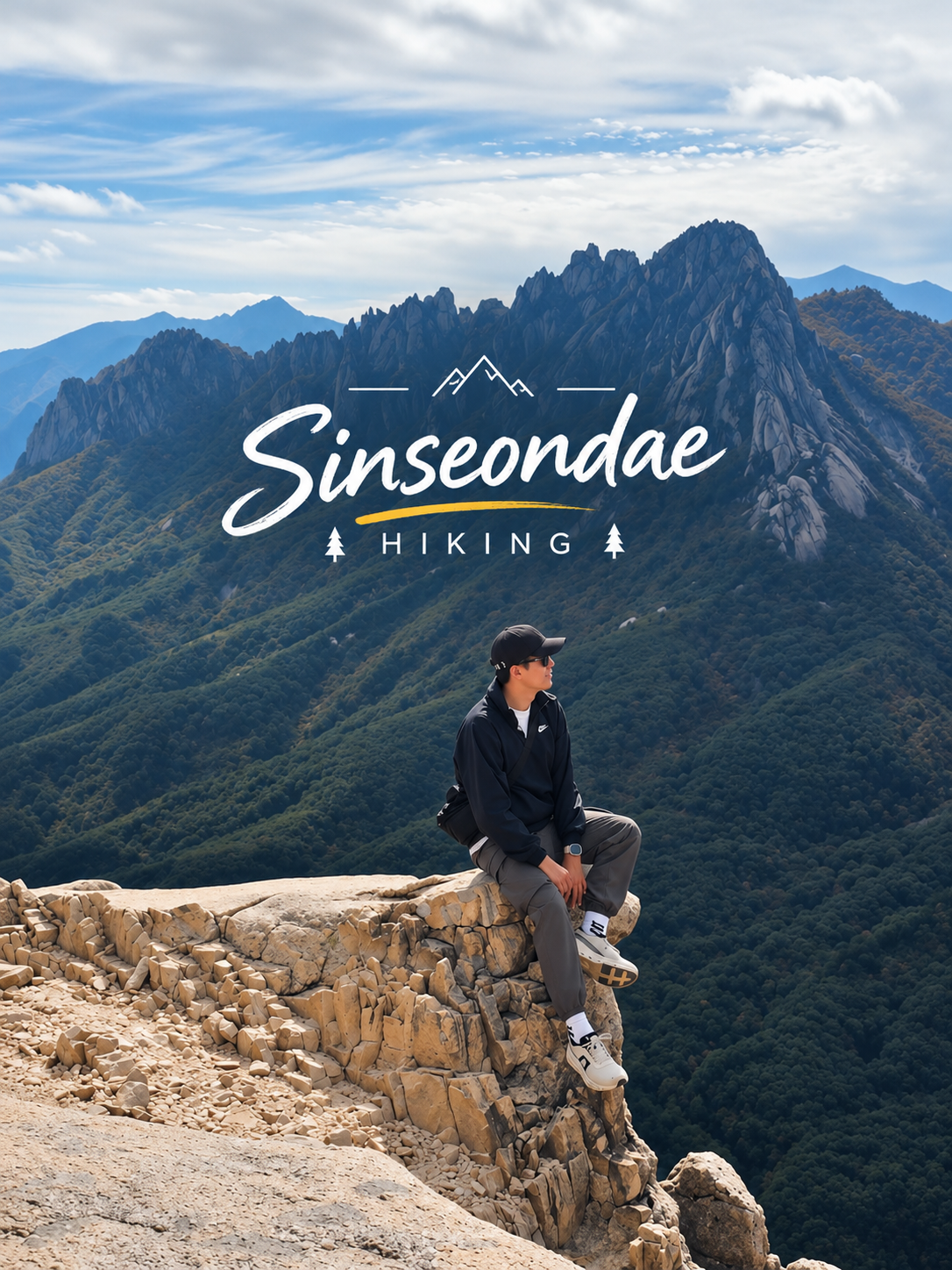
Hi! For this trip, I went hiking in South Korea. My destination was Mount Geumgangsan and its famous Sinseondae (신선대) viewpoint, a favorite among Korean hikers. I’ll walk through how I got there, what I brought, how far I walked, and what the trail was like, so even a first-time visitor can follow the route.
Where is Sinseondae, and why did I want to hike there?
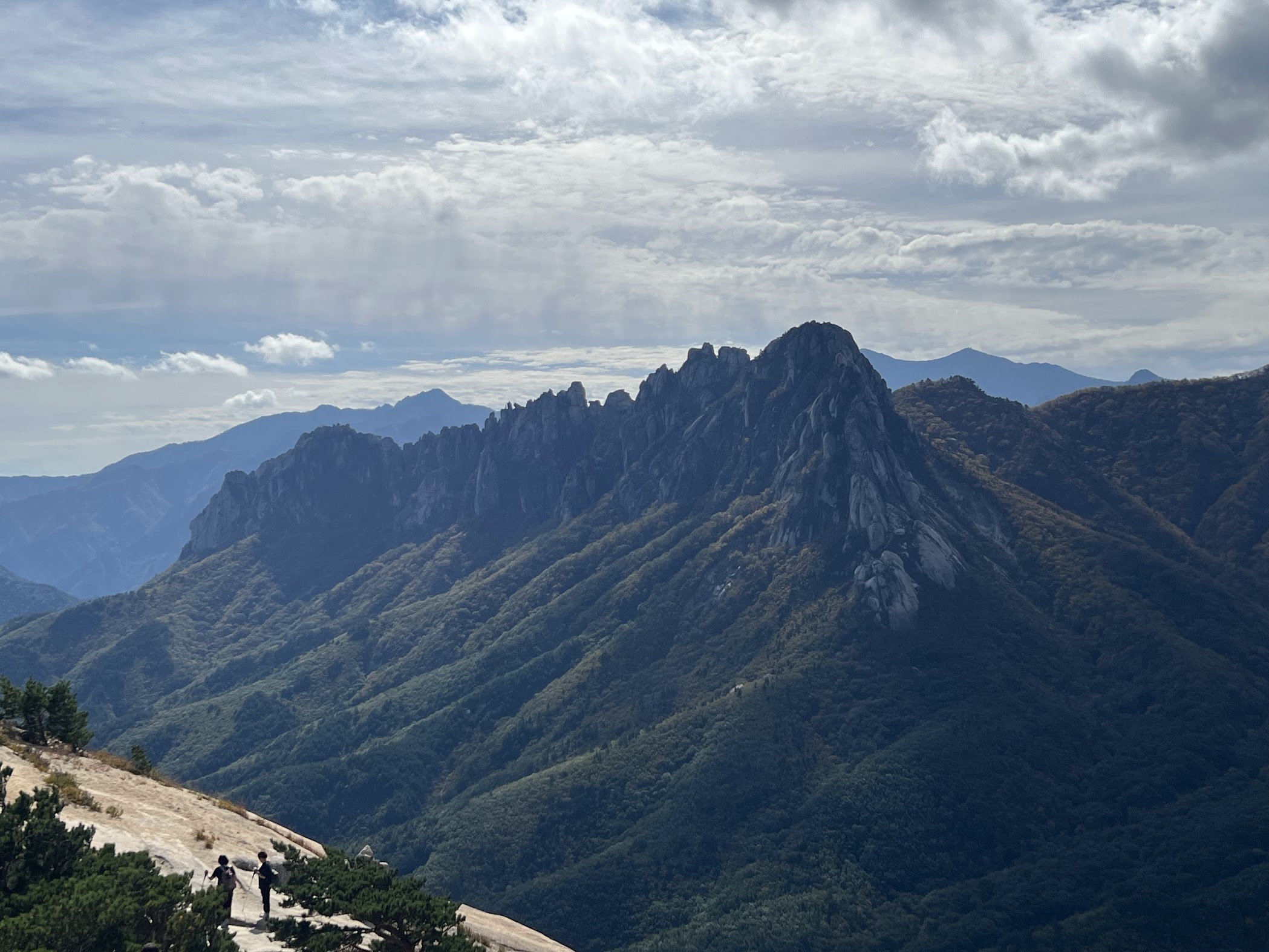
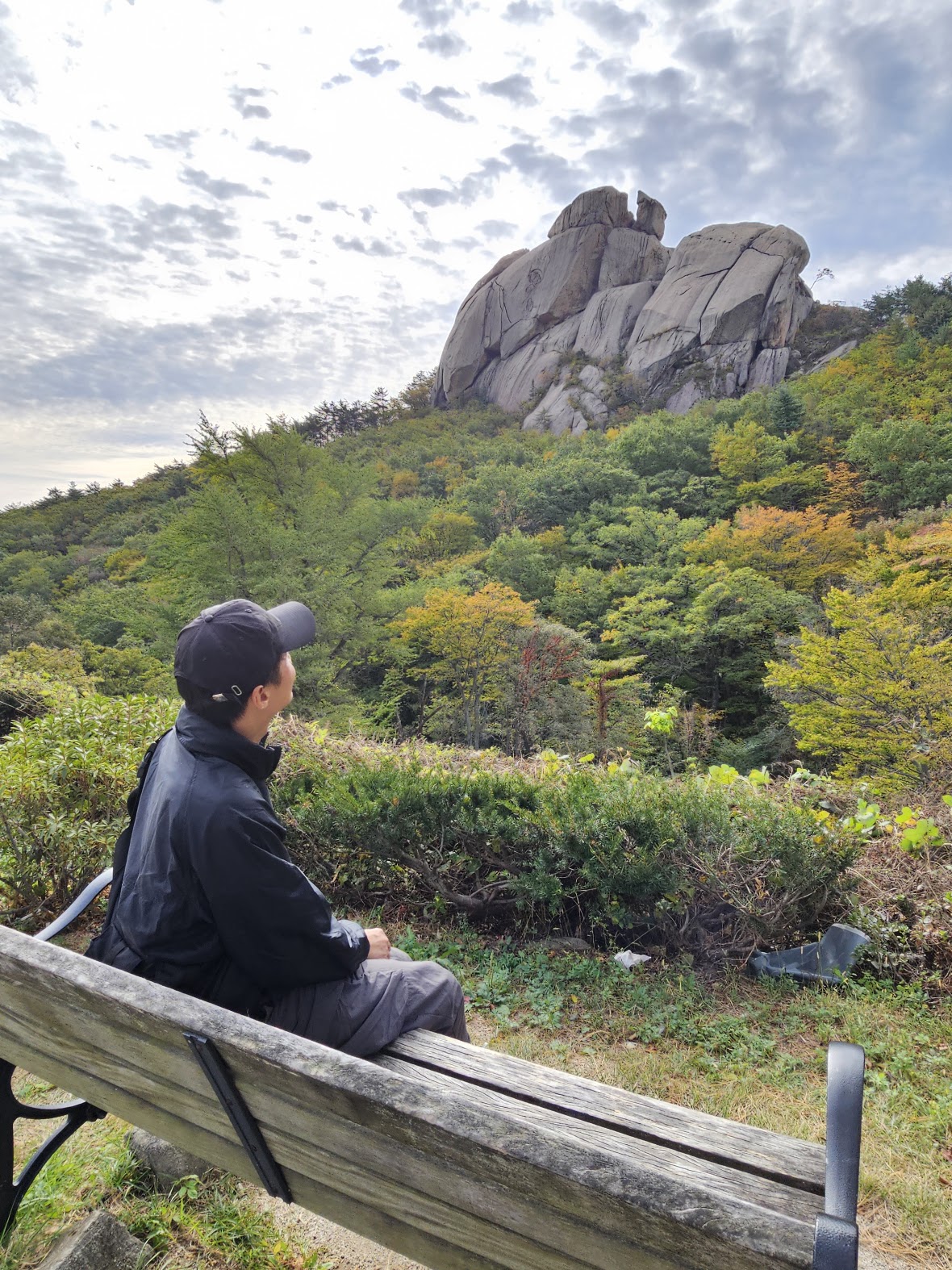
Sinseondae Viewpoint is on Mount Geumgang in Goseong, Gangwon-do. Search Instagram for “금강산 신선대” or “금강산 성인대”, and you’ll see feeds full of views like this one. That’s how I discovered it: I was scrolling through Instagram, stopped at a photo, and wondered how somewhere so beautiful had escaped me despite my many trips to Korea. I decided I had to hike there someday. The view I’d come for was Ulsanbawi (울산바위), a vast line of granite peaks rising right in front of the viewpoint. From above, it reminded me of the Dolomites in Italy.
Sinseondae hiking quick facts
| Details | |
|---|---|
| Viewpoint | Geumgangsan Sinseondae (금강산 신선대 / 성인대) |
| Area | Goseong, Gangwon-do, South Korea, near Seoraksan |
| Trailhead | Hwaamsa Temple |
| Distance | Approximately 4–6 km round trip, depending on the route |
| Time | Approximately 2–3.5 hours round trip |
| Difficulty | Moderate |
| Summit elevation | 645 m above sea level |
| Terrain | Forest paths, steep sections, and exposed rock |
| Highlights | Views of Ulsanbawi and the Seoraksan range |
| Best season | Summer through autumn; the trail generally opens from May to November |
| Admission | Free |
Getting to the Sinseondae trailhead
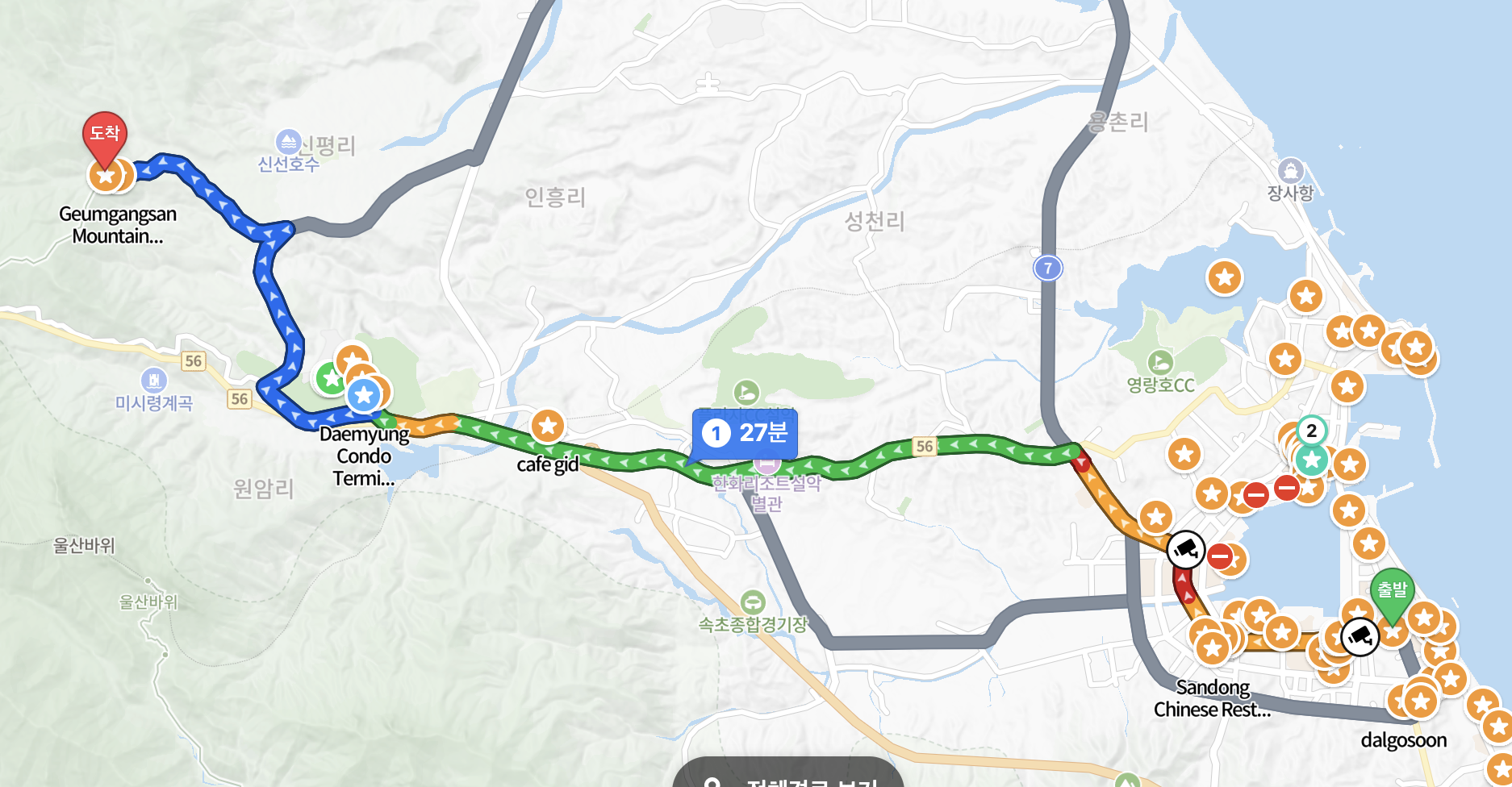
The Sinseondae trail starts near Hwaamsa Temple in Goseong, Gangwon-do. At present, public transportation doesn’t go all the way to the trailhead. If you’re traveling in a group, renting a car and driving from Seoul is one option. For a shorter, less tiring drive, stay in Sokcho and drive about 15 km to Hwaamsa’s parking area. It takes roughly 27 minutes, and you can already see Ulsanbawi towering beside the road.
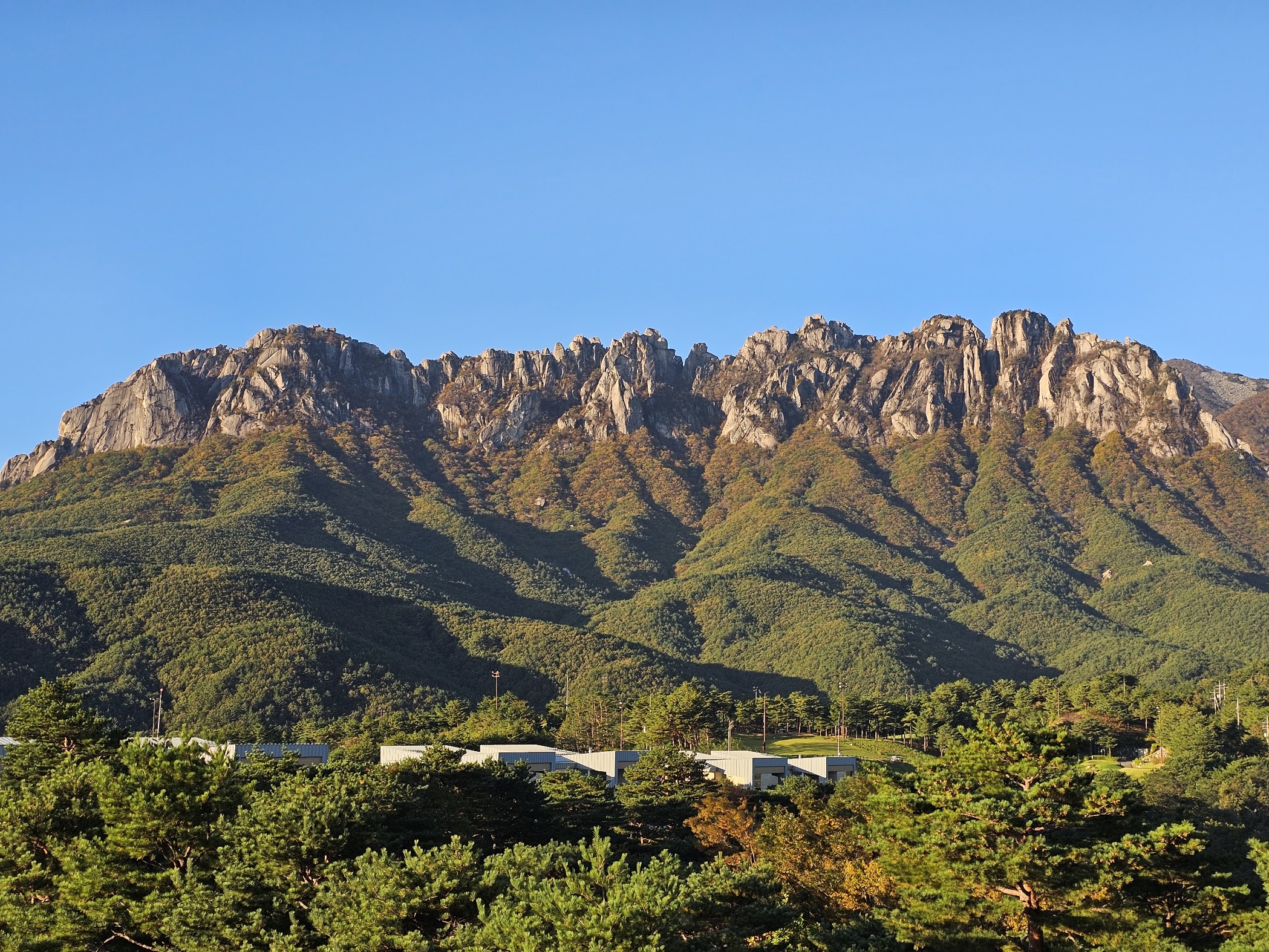
If you don’t want to drive, you can take a taxi. A ride from Sokcho costs around 23,000 won (about 580 baht). On this trip, I stayed at Sono Delpino Golf & Resort & Hotel, one of the Sono resorts in Korea. It isn’t far from the trailhead. My room cost around 2,000 baht a night, and it had a beautiful view of Ulsanbawi too.
I booked a taxi through the Kakao T app and set the destination to Hwaamsa Temple. The driver dropped me right by the trailhead. From the hotel, the journey took only five minutes and cost 7,600 won (about 190 baht).
Hiking Sinseondae: My experience on the trail
Finding the trailhead
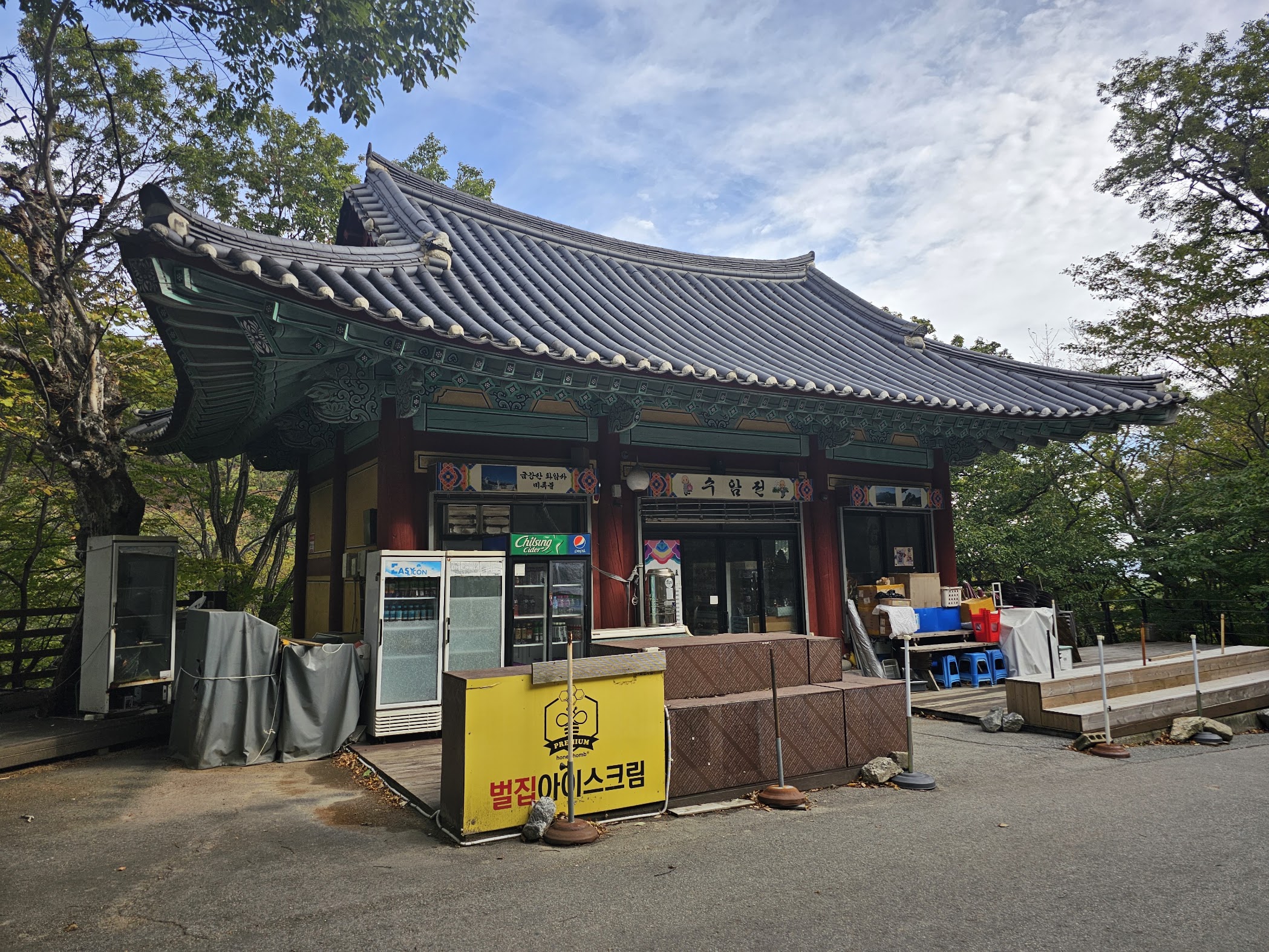
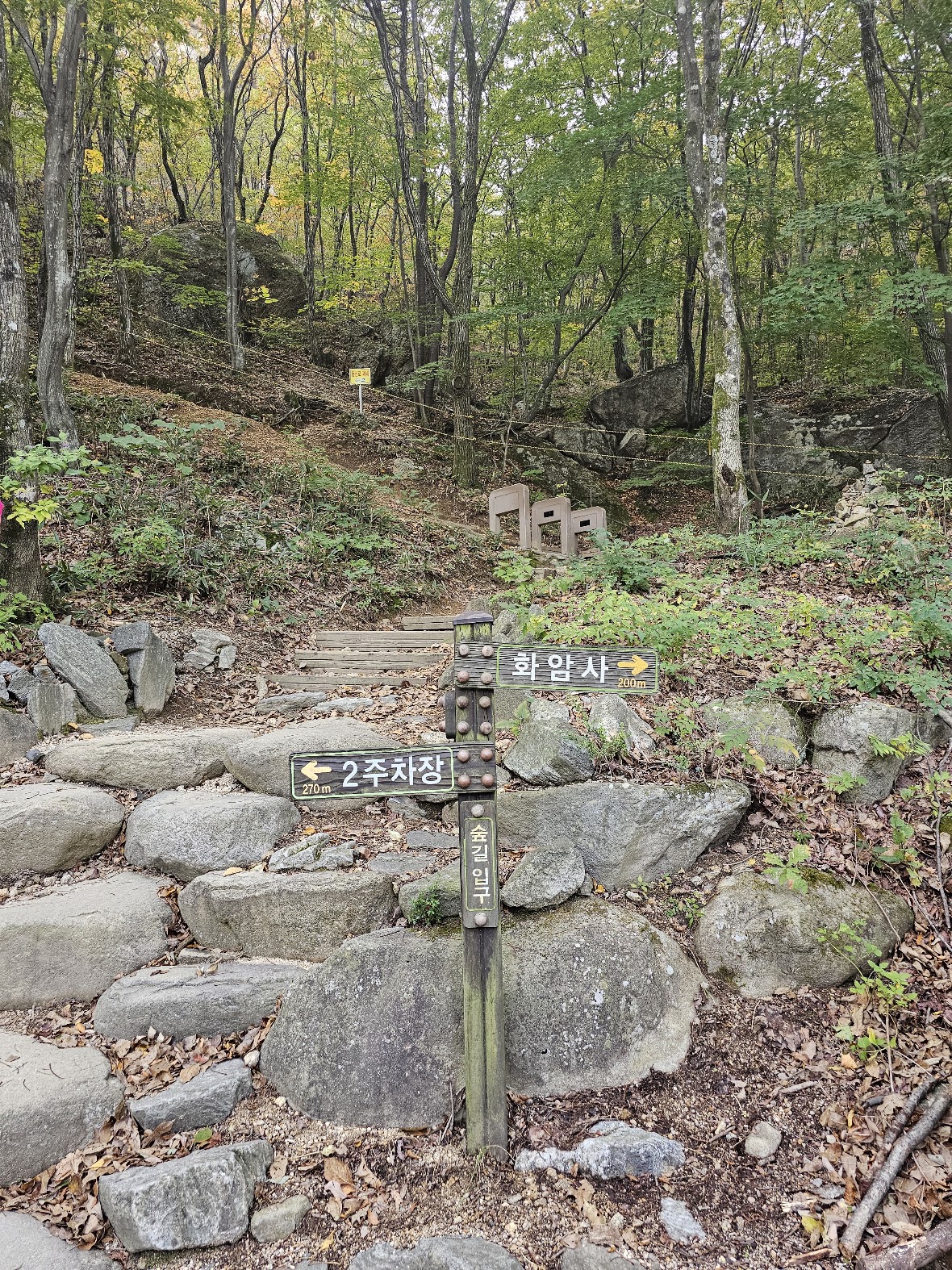
From Hwaamsa, walk downhill toward a small shop called Suamjeon (수암전). Across from it, you’ll find the trailhead sign for Subawi, the first granite viewpoint on the hike. Look for the sign reading 숲길입구, which means “forest trail entrance,” and start climbing there.
Subawi and the path to Sinseondae
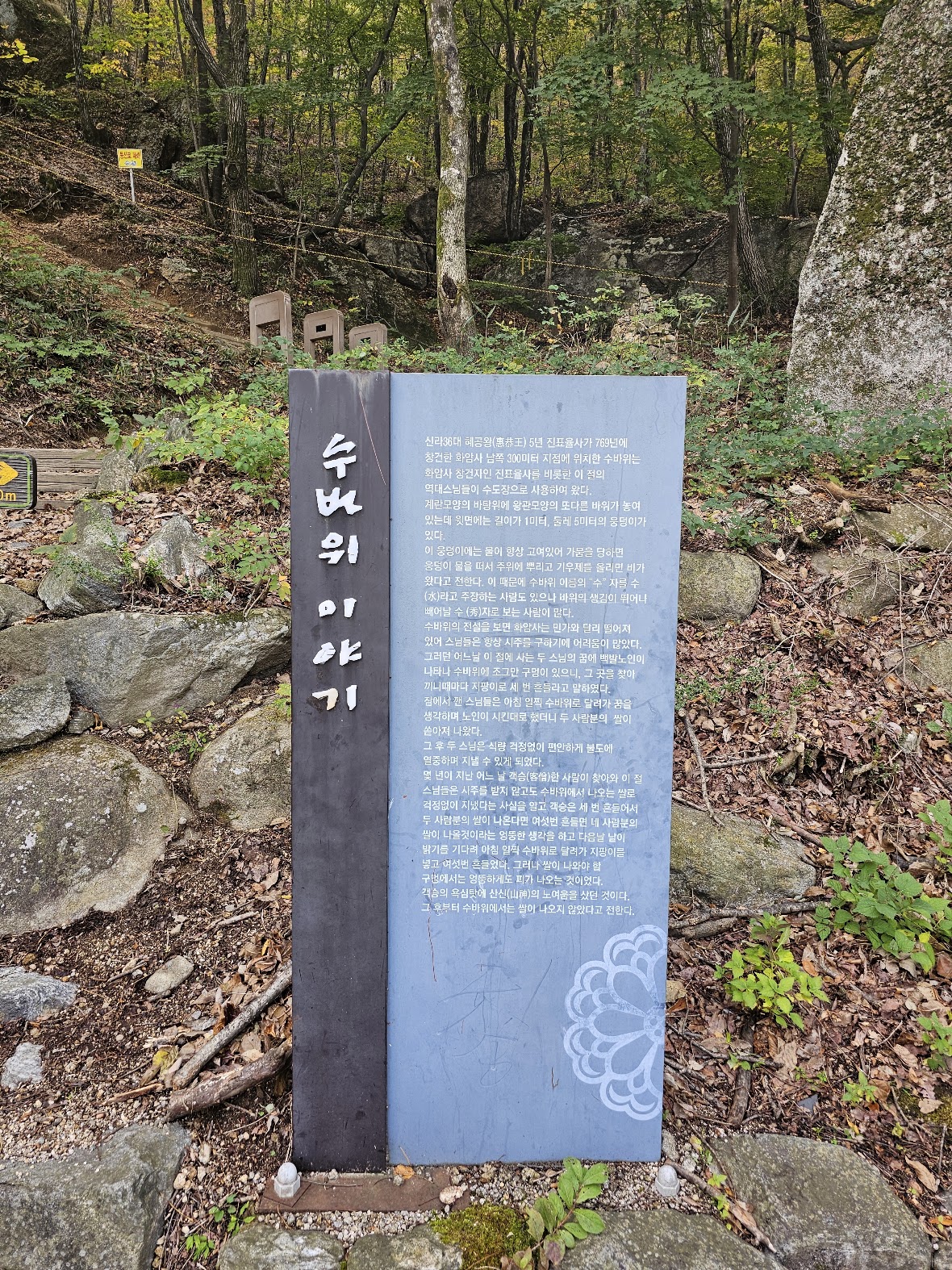
One of the first worthwhile stops above Hwaamsa is Subawi Rock (수바위), a large rock formation on the hillside and a landmark on this route.
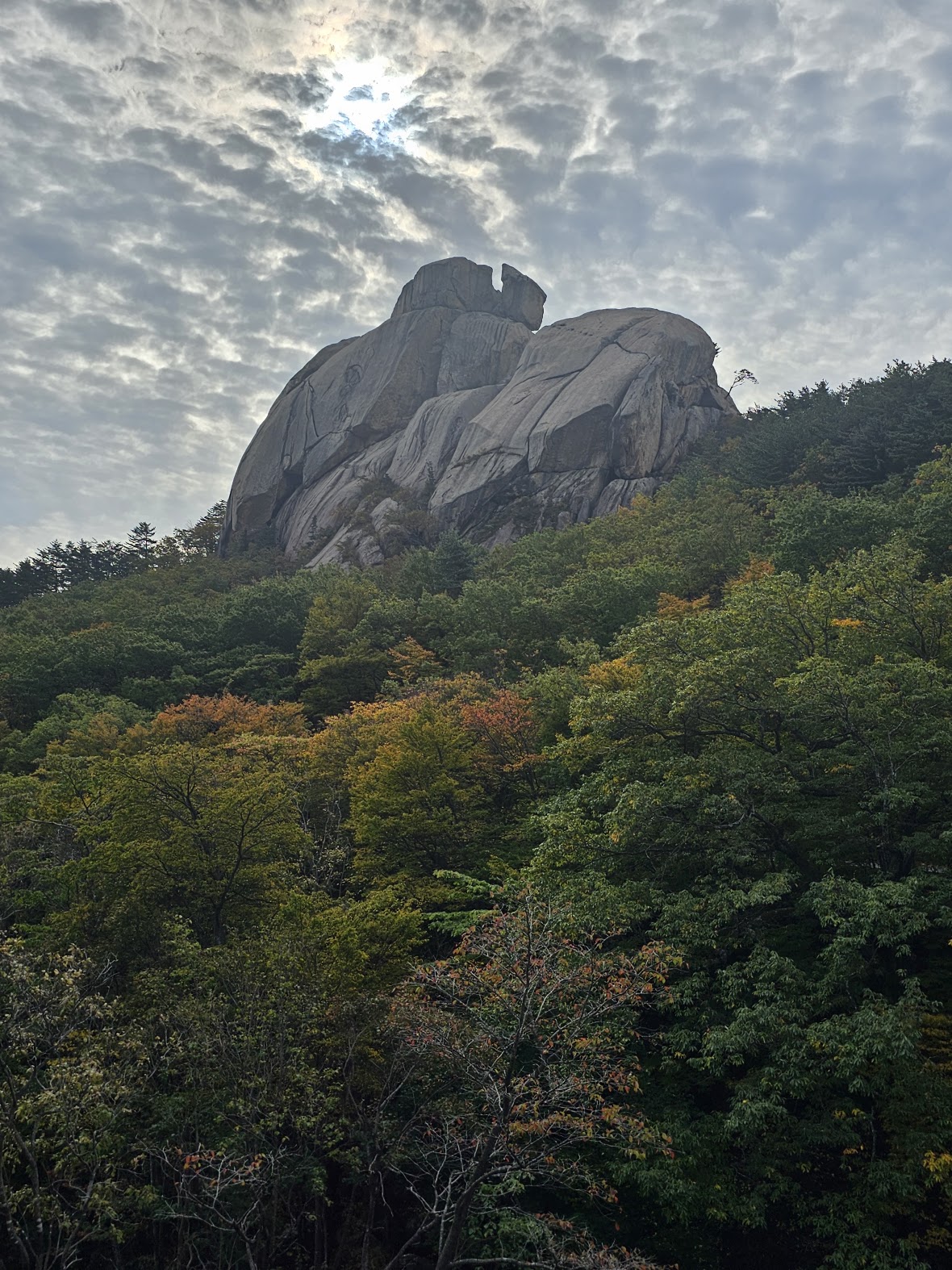
Climb to the viewpoint on top and you can look down on Hwaamsa Temple, with Ulsanbawi visible farther away. It’s a preview of the bigger panorama waiting at Sinseondae.
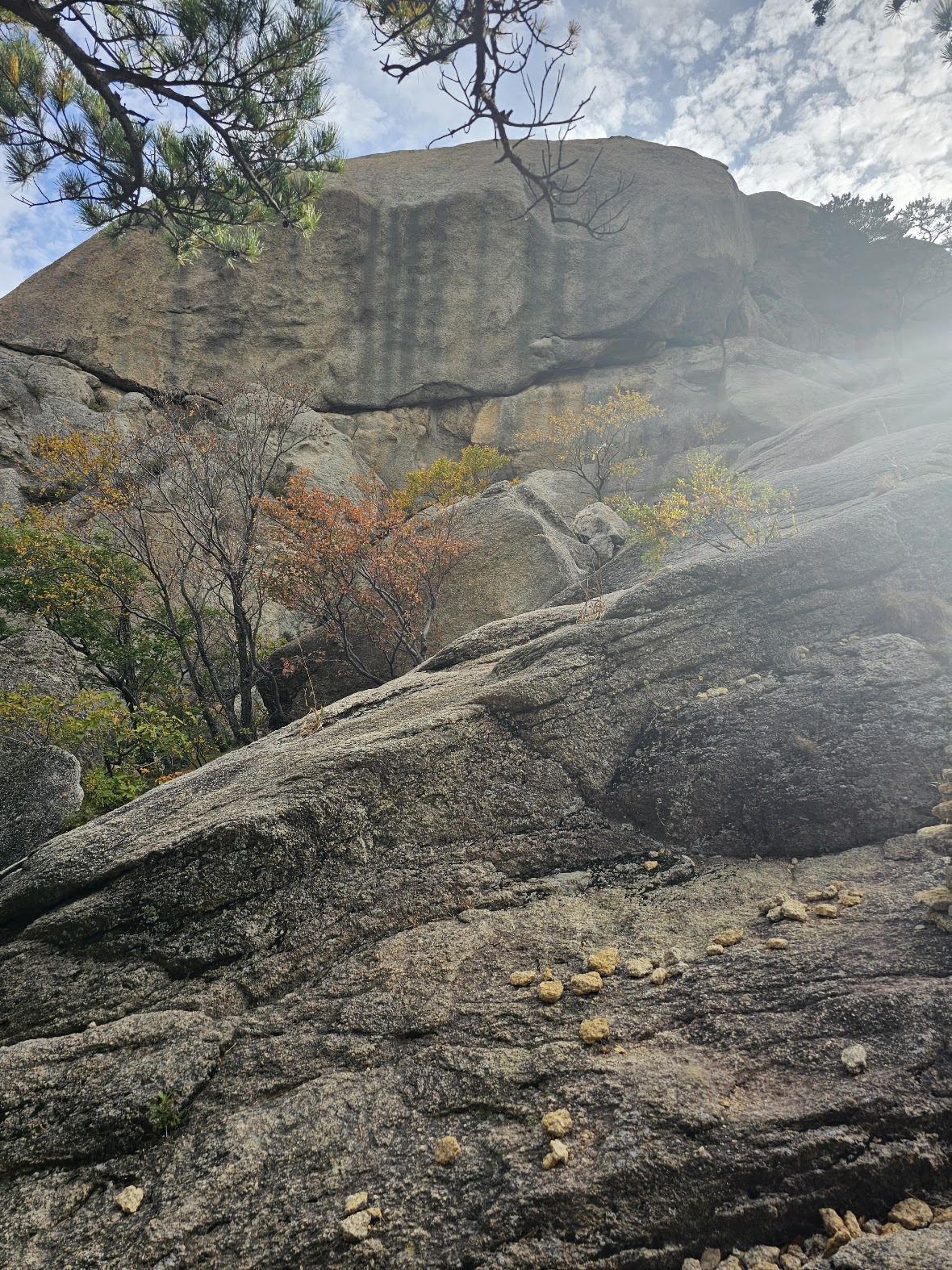
Subawi has a local legend as well. The story goes that rice once flowed from a hole in the rock and fed the people nearby, until one day it stopped. That’s why the rock is also called Ssalbawi, or Rice Rock.
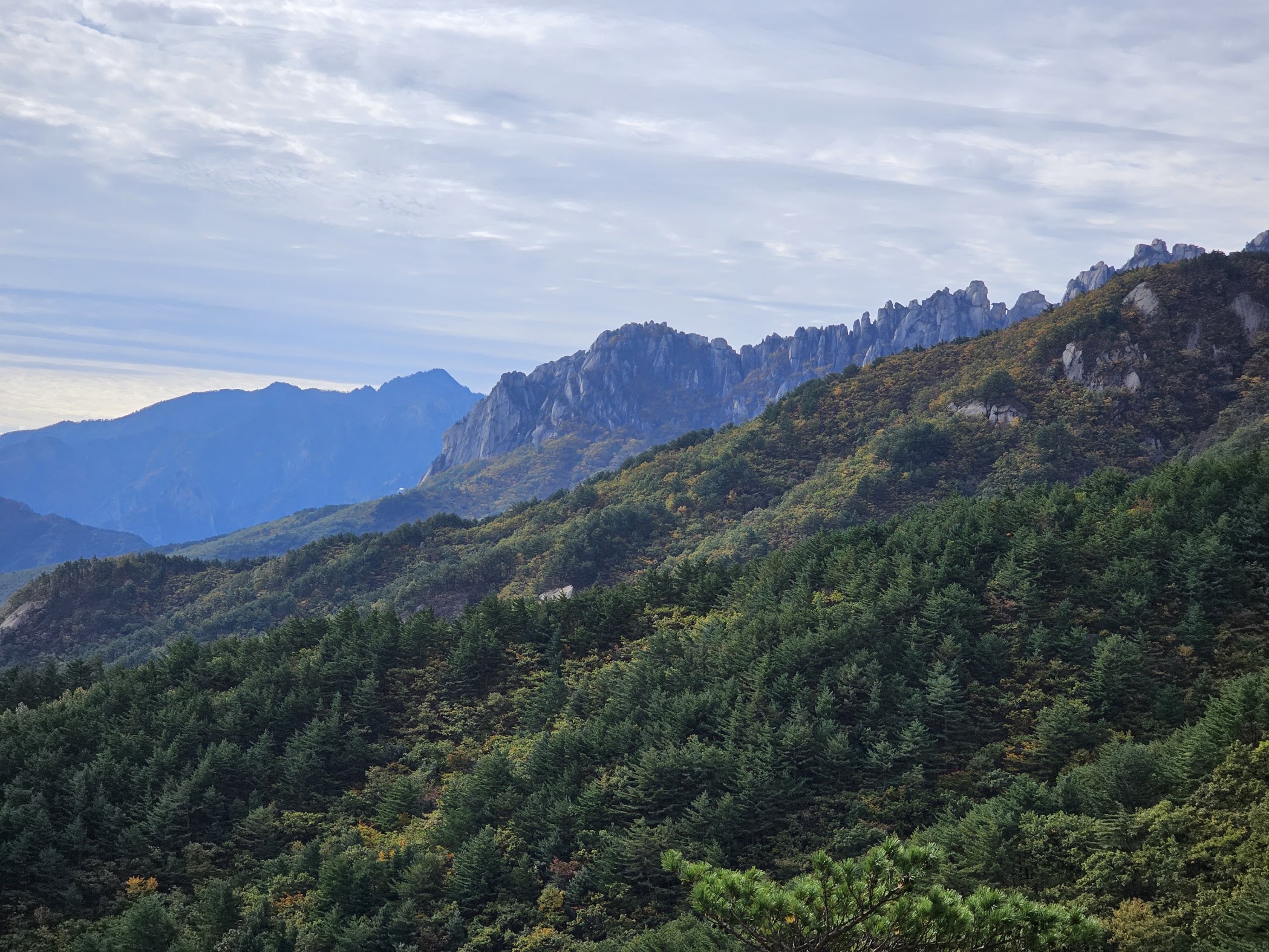
It’s worth stopping here for photos and a breather. Take care on the rock, especially if it’s raining or windy. There’s also a place to rest nearby.
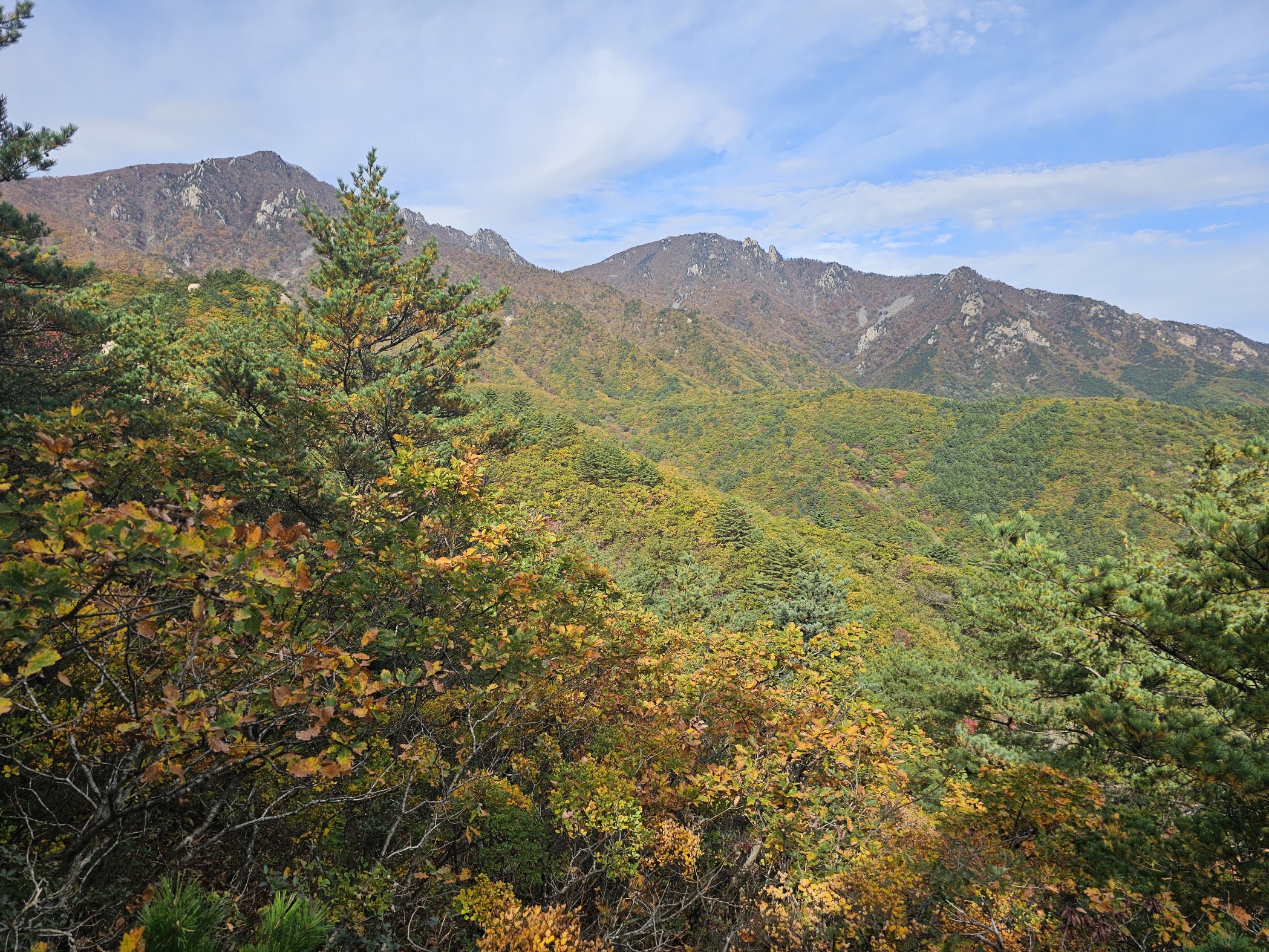
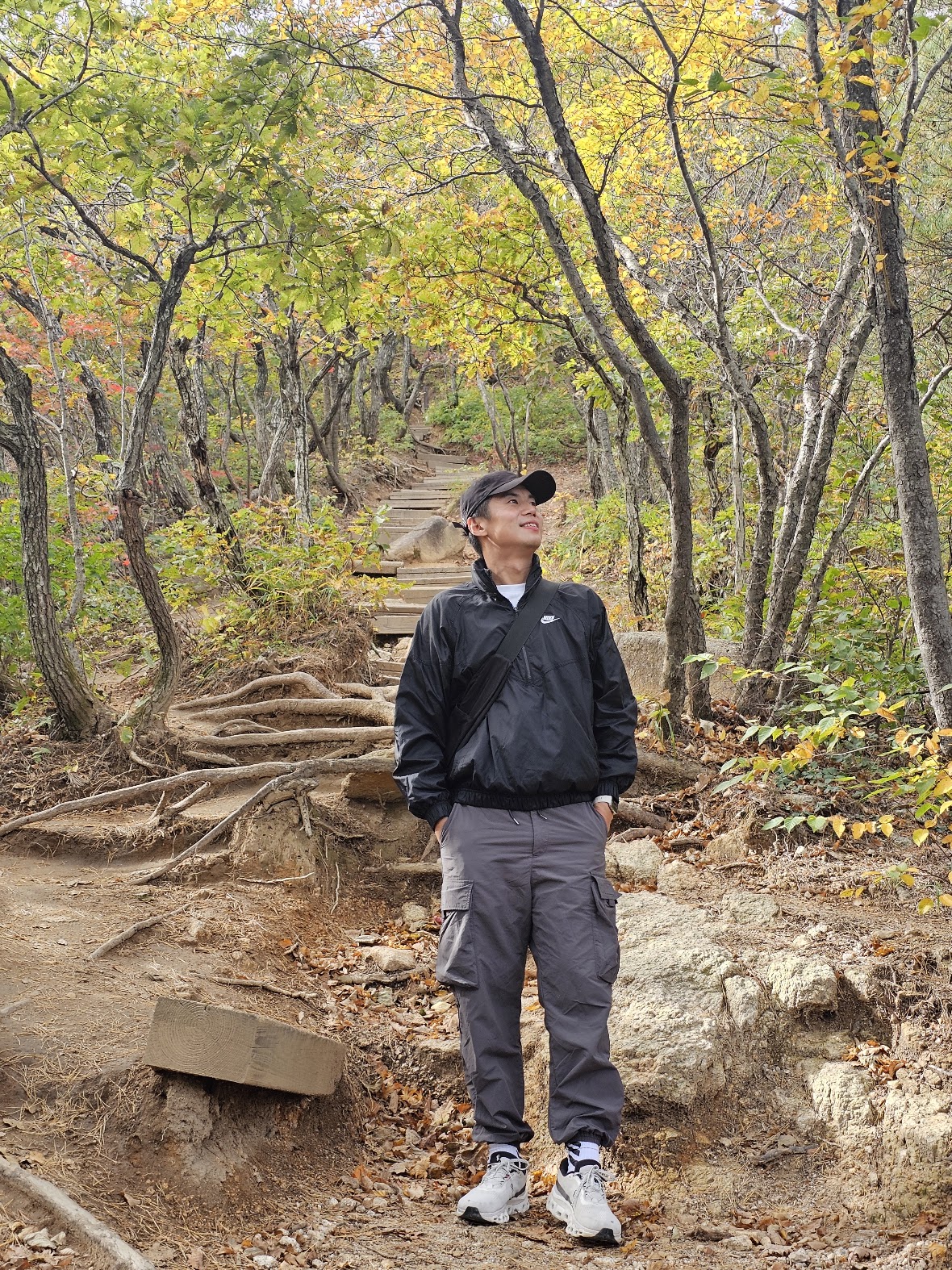
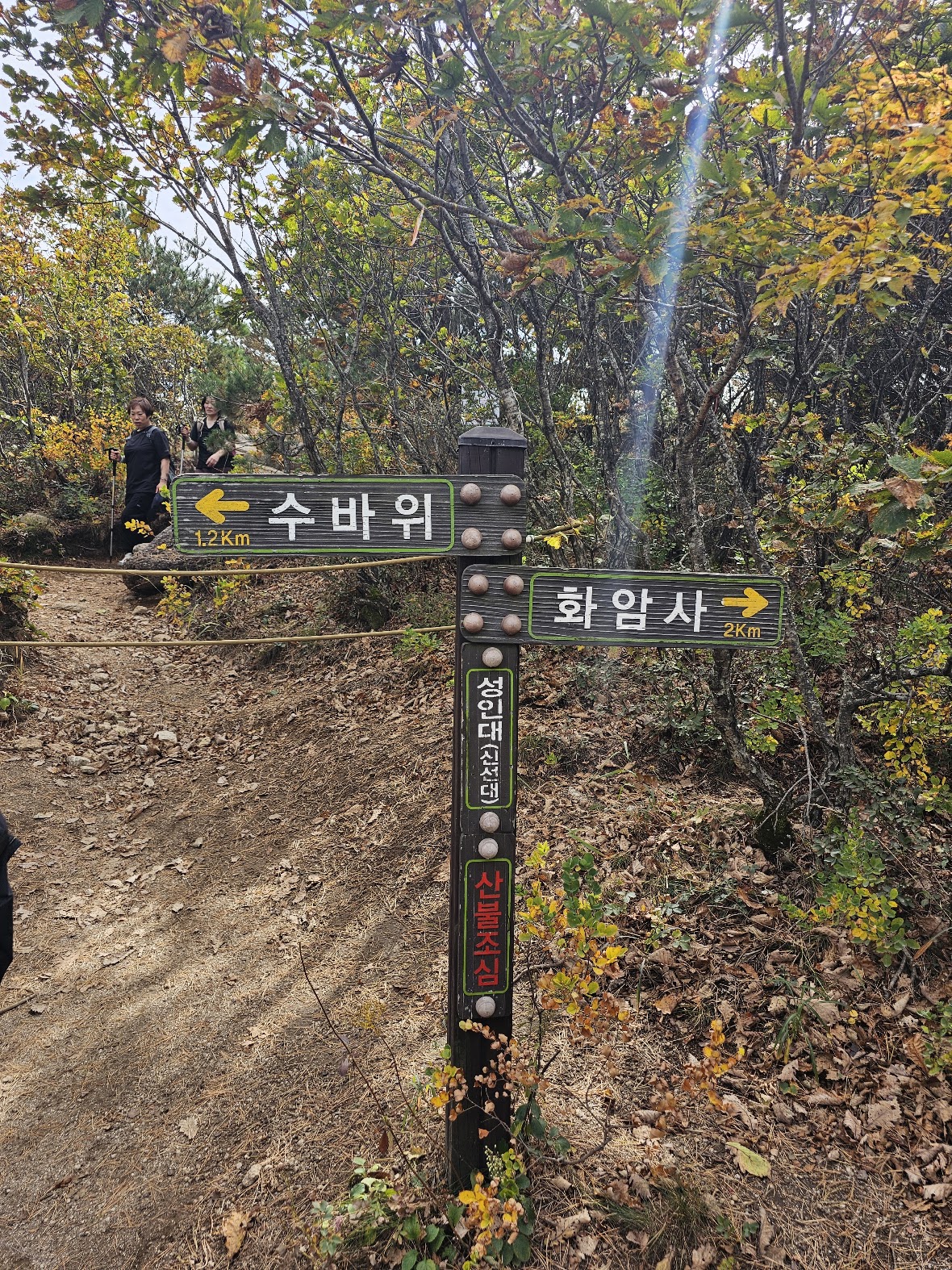
From Subawi, I followed the signs for Sinseondae. Some signs say Seongindae instead; they refer to the same place. The signs were in Korean, without English translations, but the trail itself was manageable. In early October, the trees on both sides were already turning yellow, orange, and red as autumn began.
I reached Sinseondae about an hour after leaving Subawi, including breaks and photo stops. There are places to pause and enjoy the view along the way. A fitter hiker who keeps moving could probably get there faster.
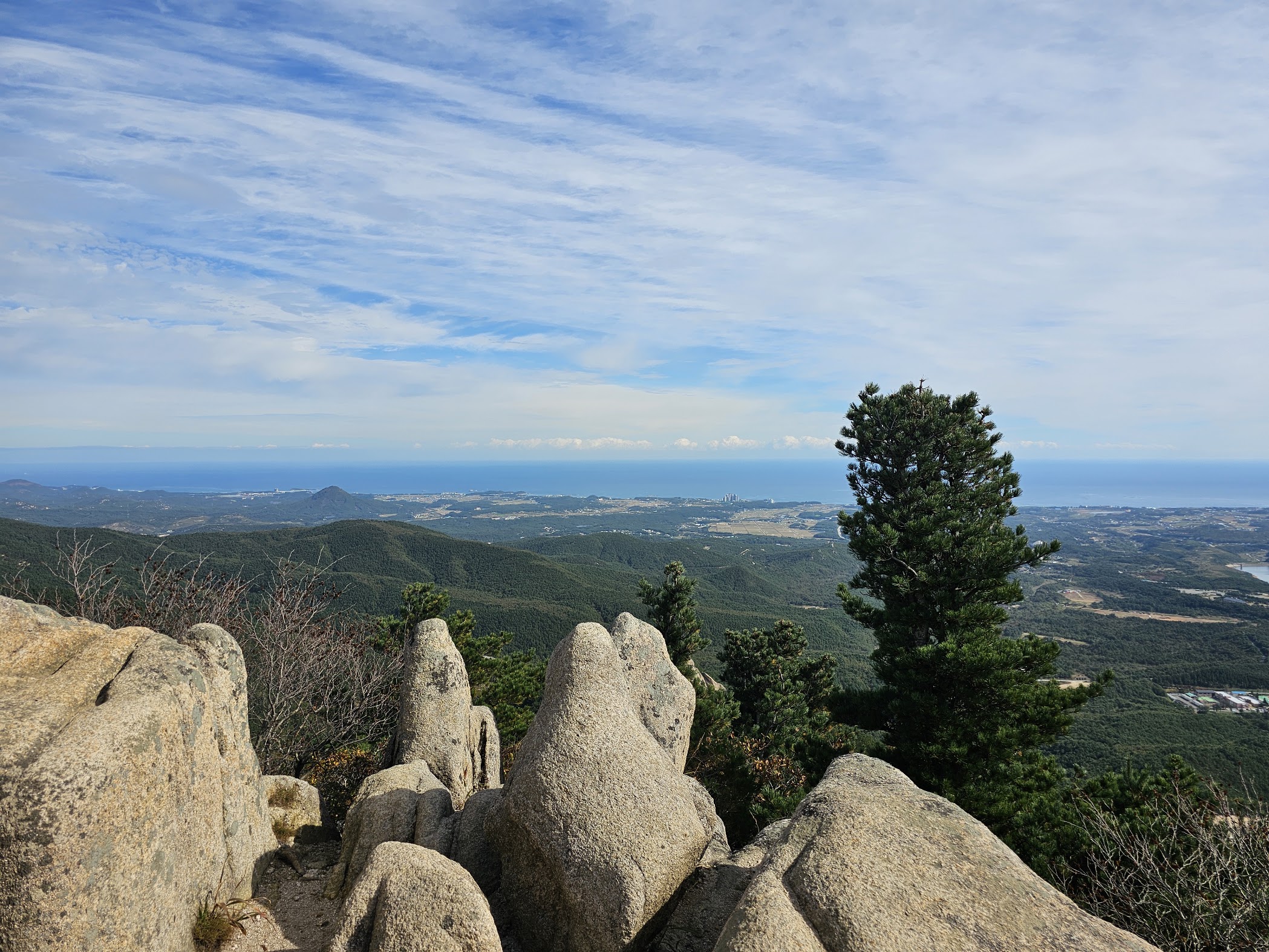
At the top, a wide, open slab of rock gives you panoramic views. The first viewpoint faces Sokcho (속초), a city on South Korea’s east coast.
On a clear day, you can see Sokcho below, the surrounding mountains, and the East Sea stretching into the distance. Seeing the city, mountains, and sea together makes this side of the viewpoint special in its own way.
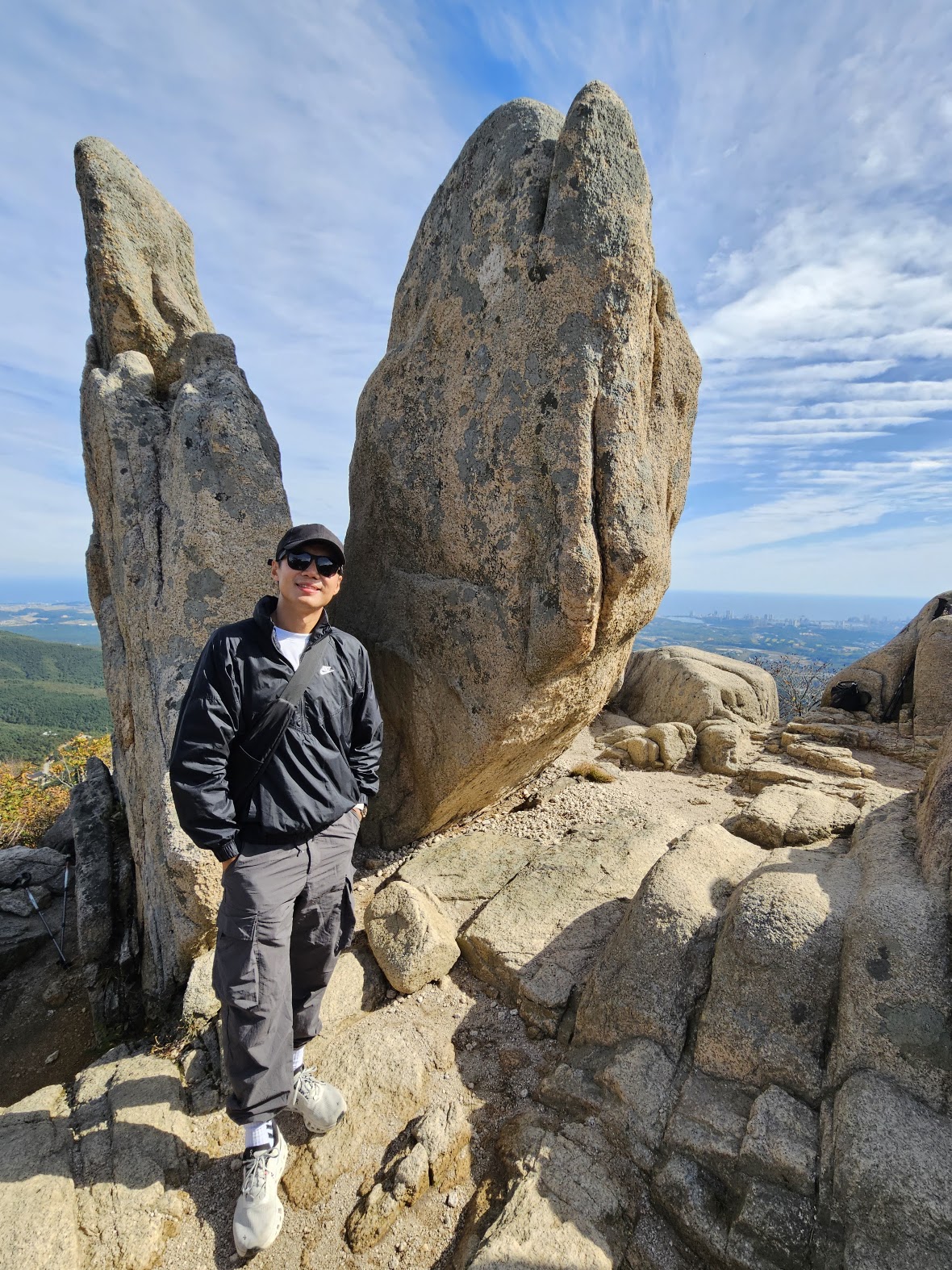
The rocky viewpoint is spacious but exposed. Some spots are close to the cliff edge, and the wind can be strong, so take care and bring a windproof jacket.
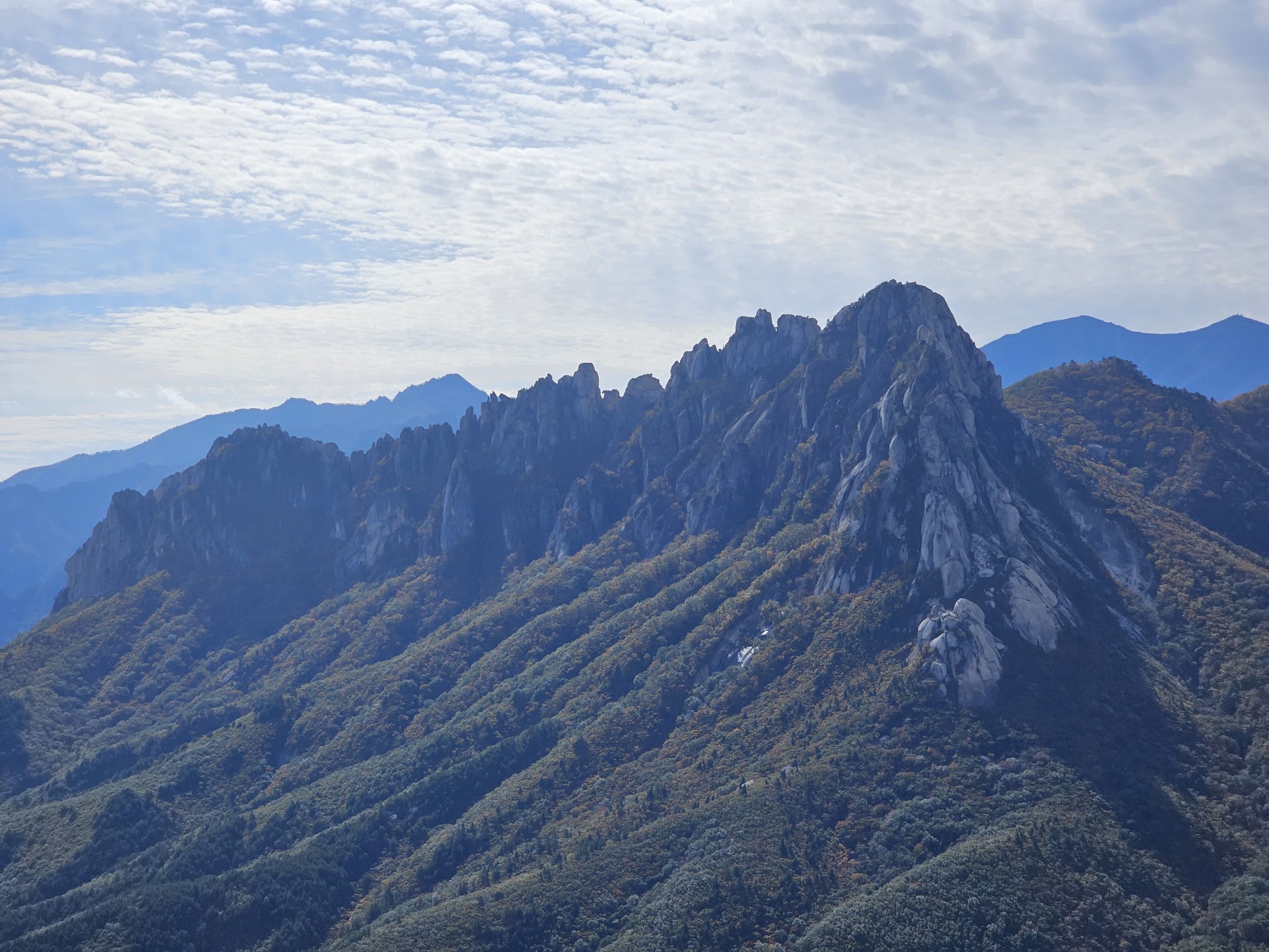
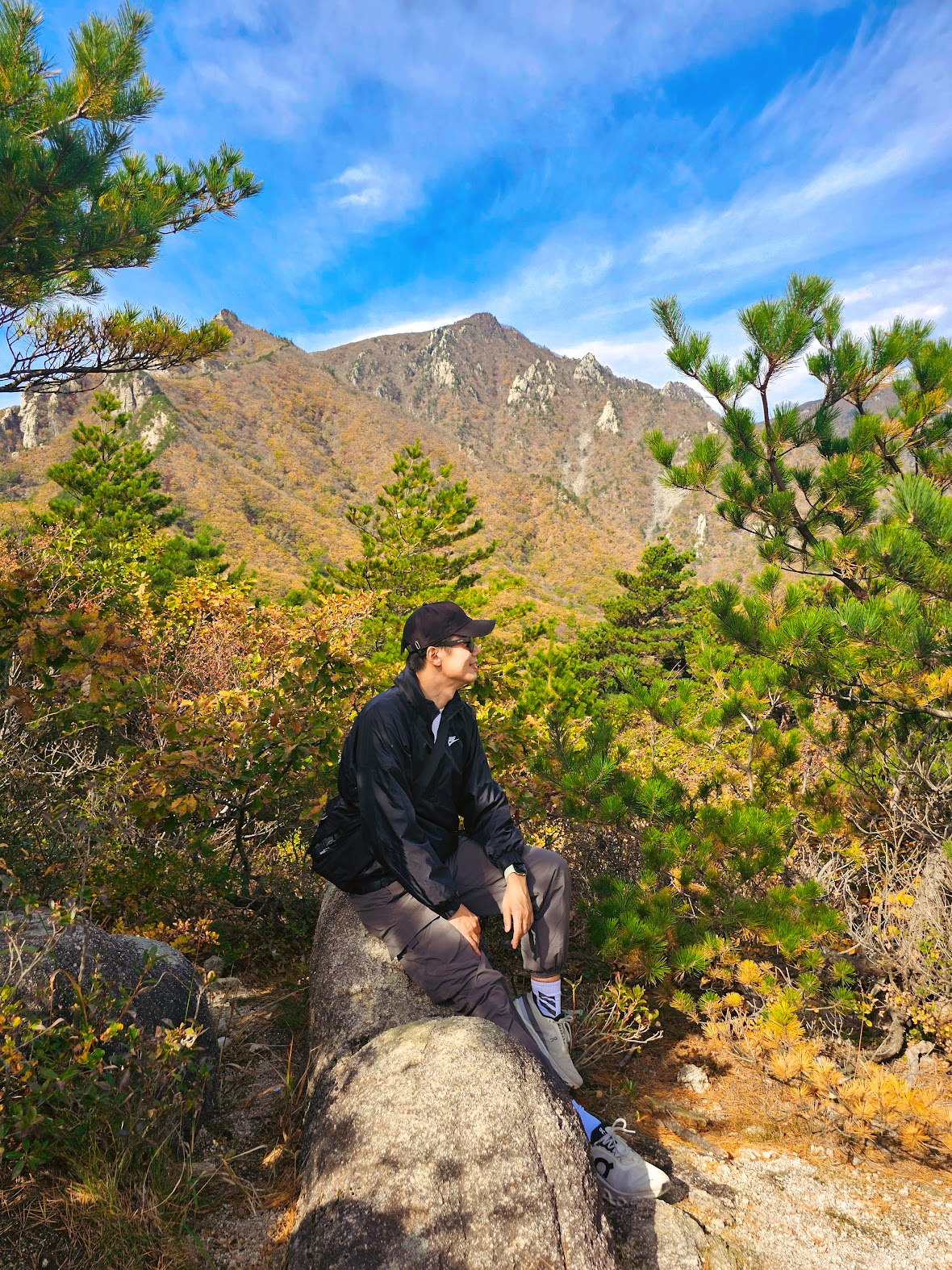
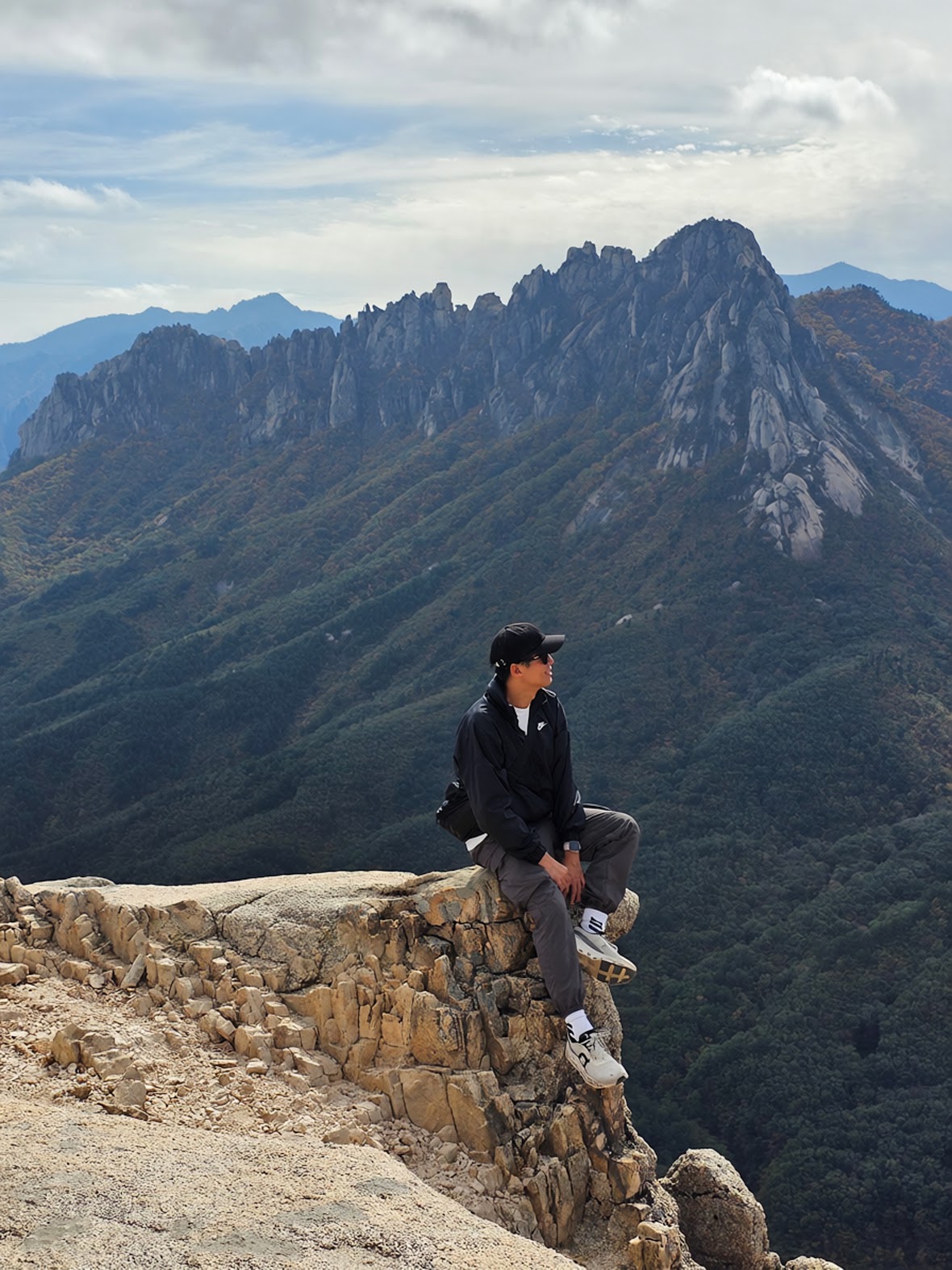
The Sokcho view alone was worth the climb, but it wasn’t the main reason I’d come. Walk a little farther to the other side of Sinseondae and Ulsanbawi (울산바위) rises straight ahead. Seeing those huge granite peaks in person made every step of the hike feel worthwhile.
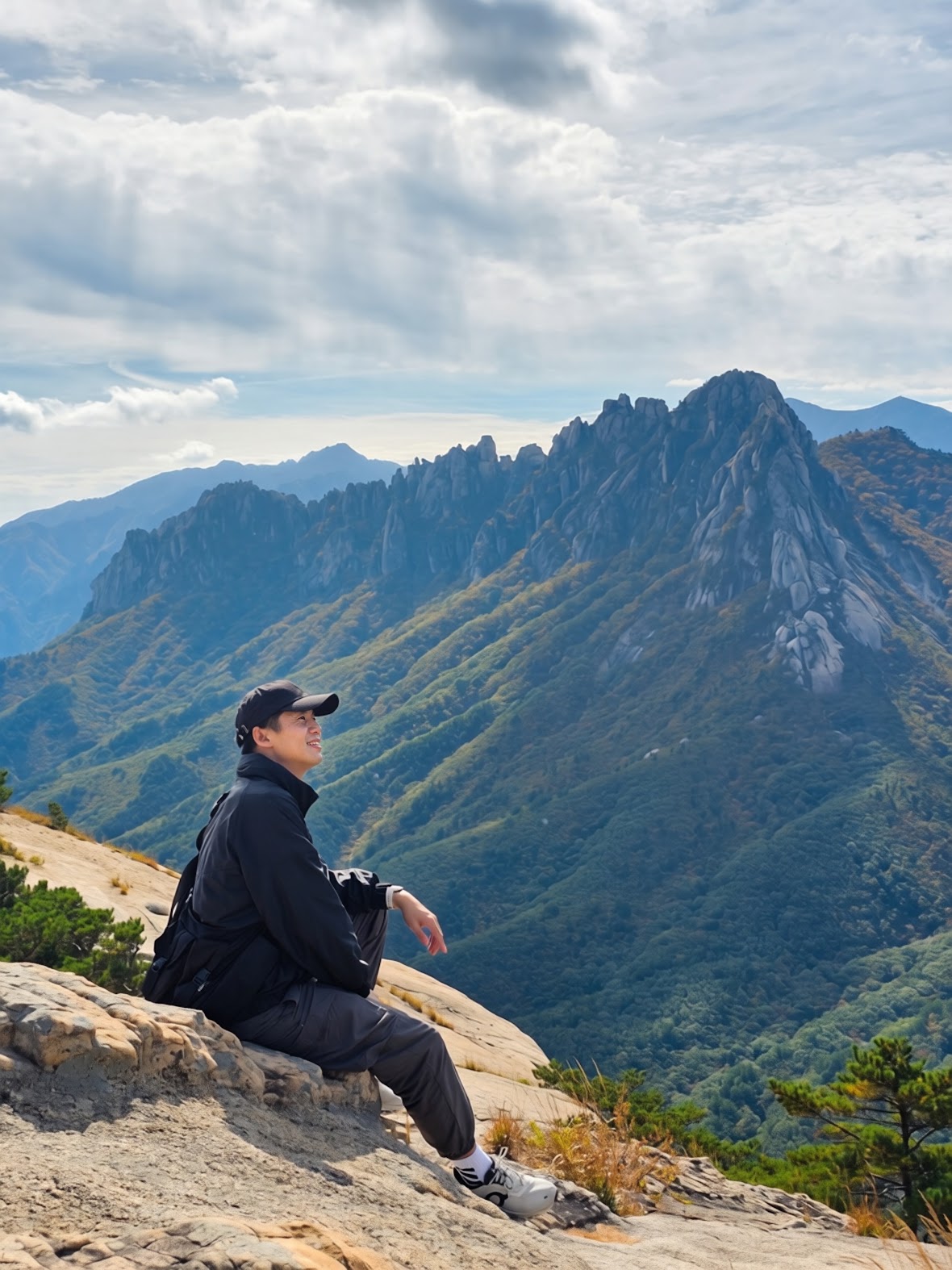
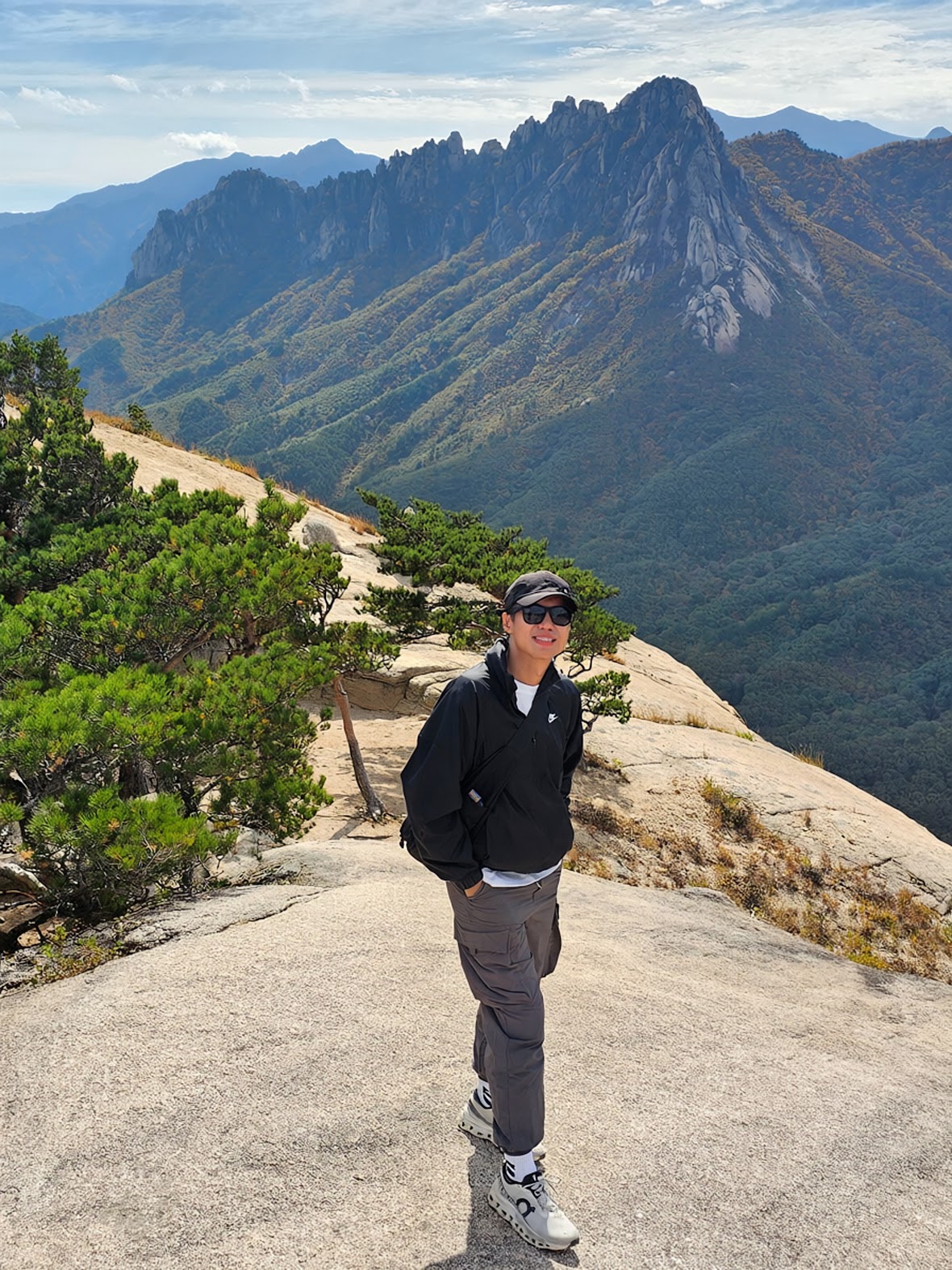
There are so many good angles for photos here that it’s hard to choose one. It really feels like a mountain hike somewhere in Europe; I can see why people call it the Dolomites of Korea.
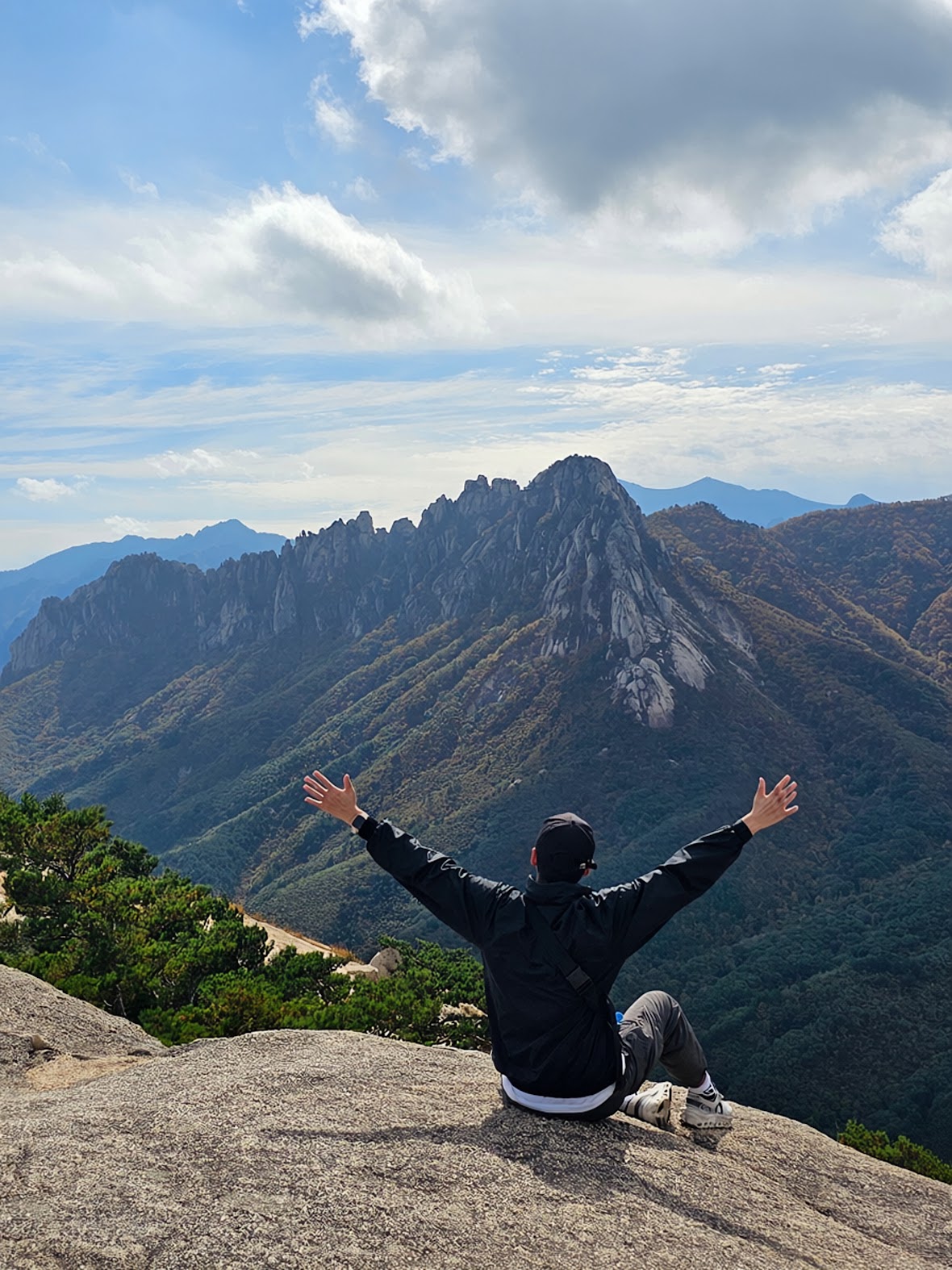
I stopped for lunch and ate the boiled eggs and protein bar I’d brought from the hotel. There are no shops along the trail, so bring your own food and water. Take your rubbish back down with you too; there are no bins on the mountain. I didn’t see any toilets either, so use one before starting the hike.
The descent and how long it took
After spending time with the Ulsanbawi view, I headed back down the Hwaamsa side. The walk from the viewpoint to Hwaamsa Temple (화암사) is about 2 km and took me around an hour, including breaks and photos.
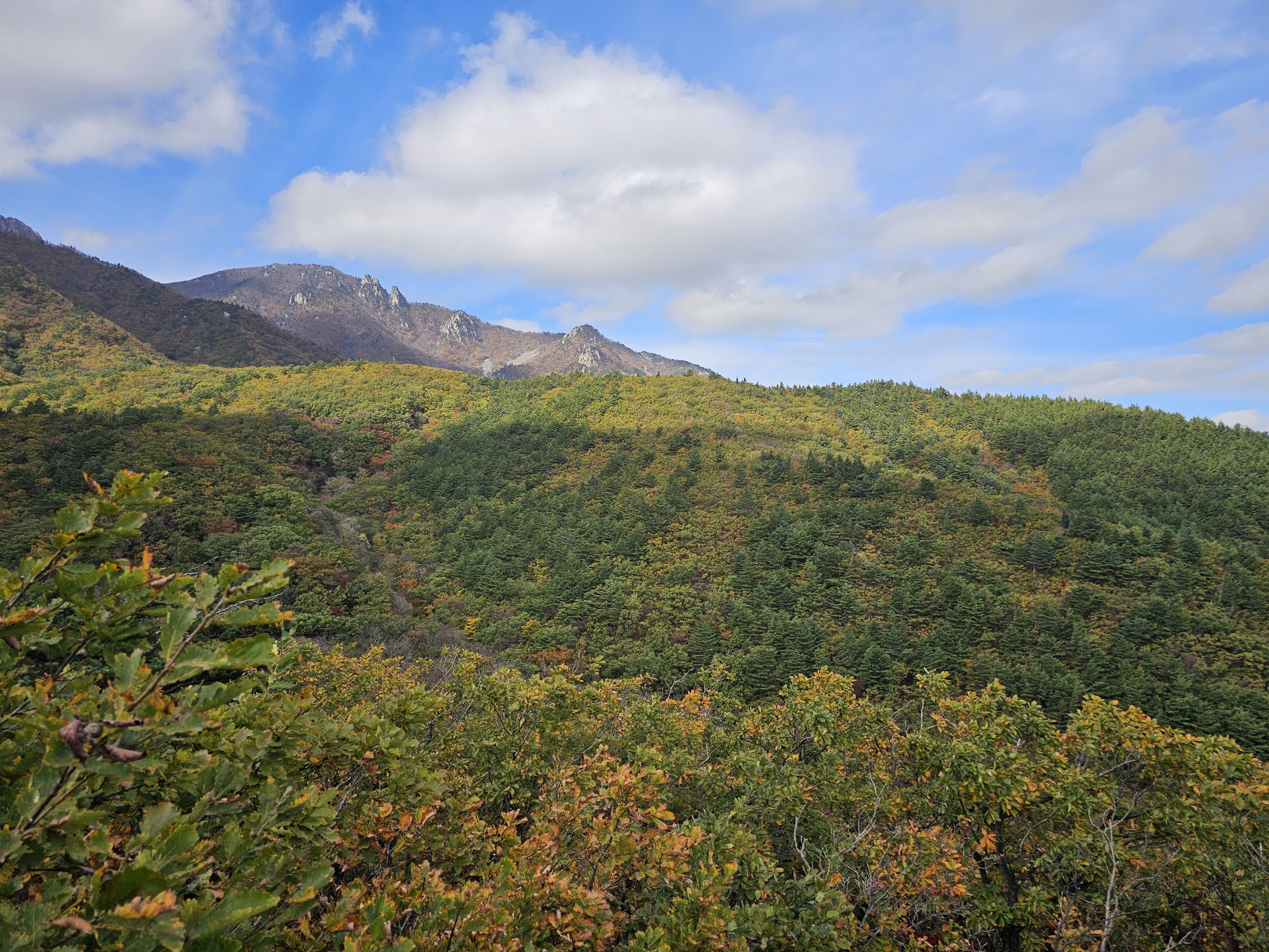
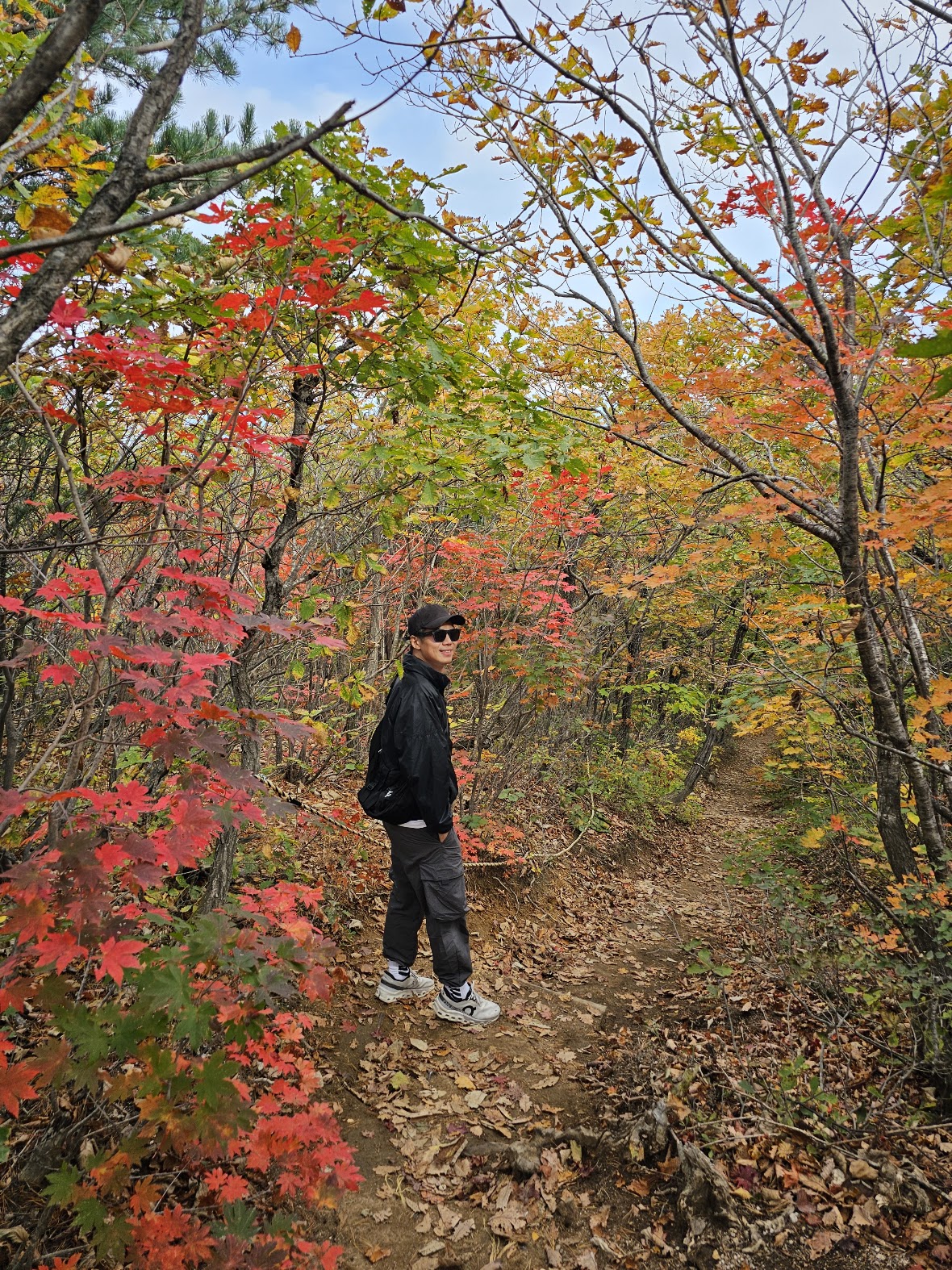
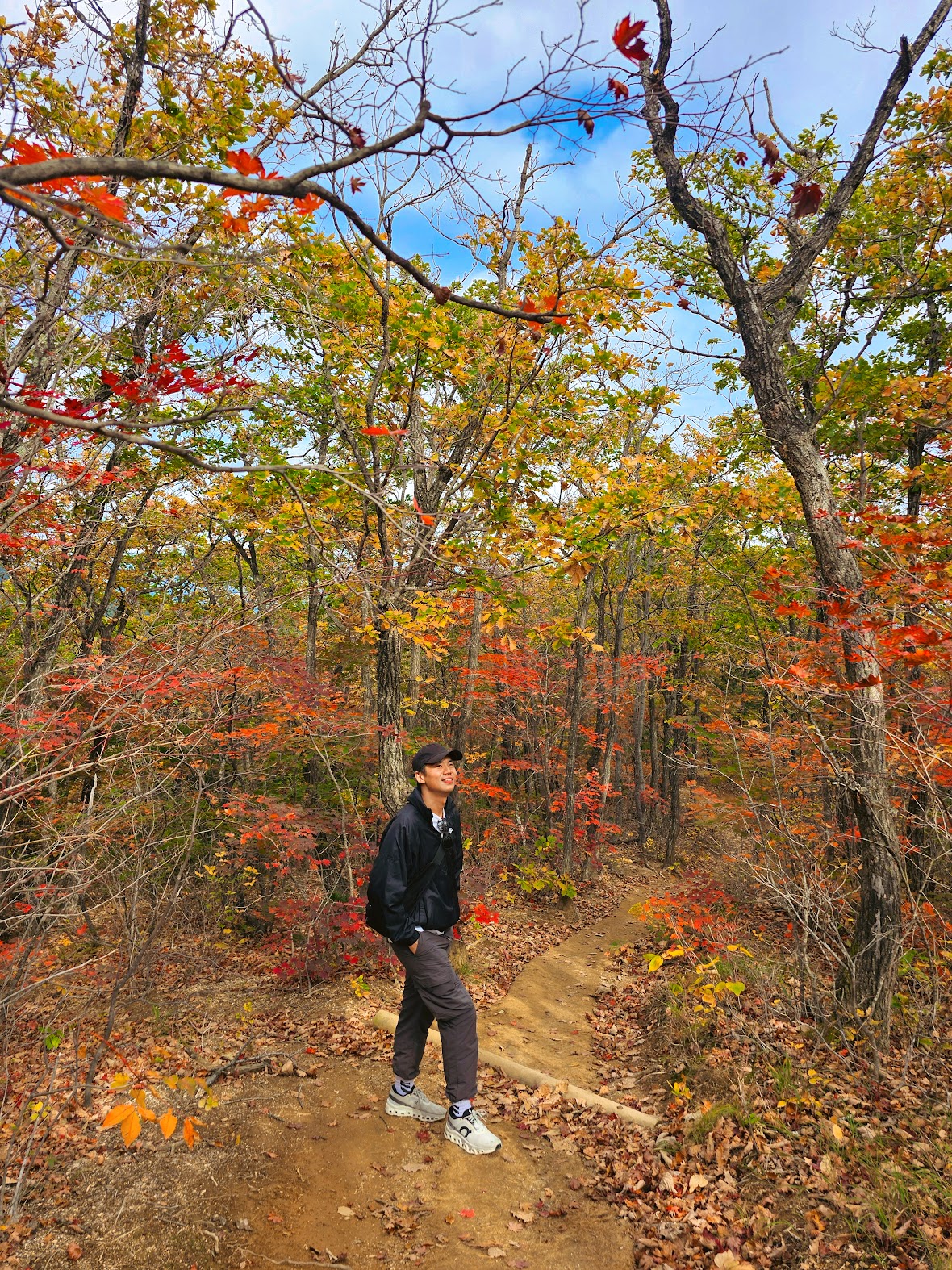
The downhill stretch was just as beautiful as the climb. Trees lined both sides of the path, their autumn leaves alternating between yellow, orange, and red. It made the descent feel bright and enjoyable, and became another highlight of the hike.
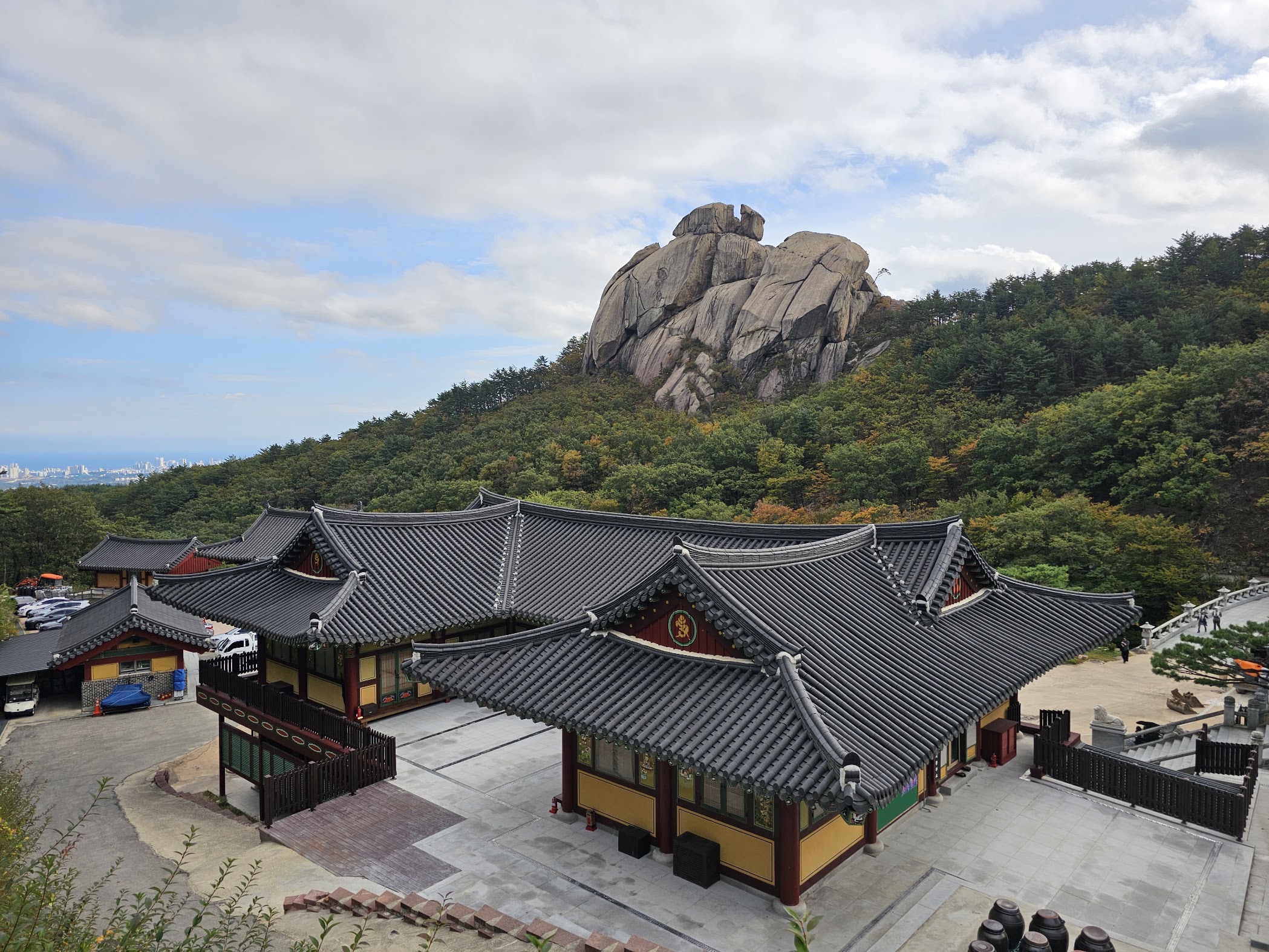
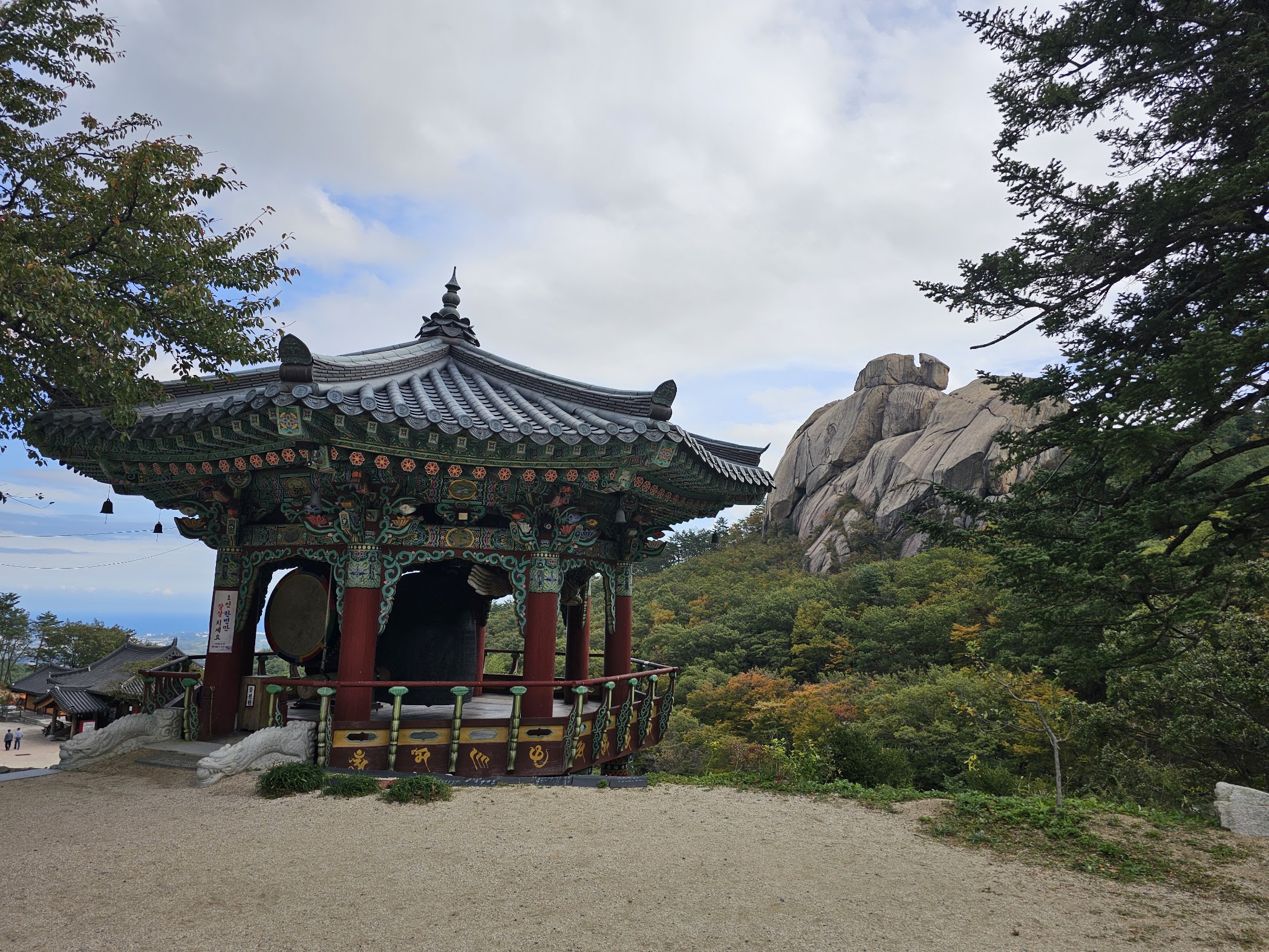
At the bottom is Hwaamsa Temple (화암사), an old Buddhist temple at the northern foot of Seoraksan in Goseong. Its history goes back more than 1,250 years: records say the monk Jinpyo founded it in 769, during the Silla period. The temple has suffered fires and been rebuilt several times, but its traditional Korean architecture and mountain setting still make it a lovely place to visit.
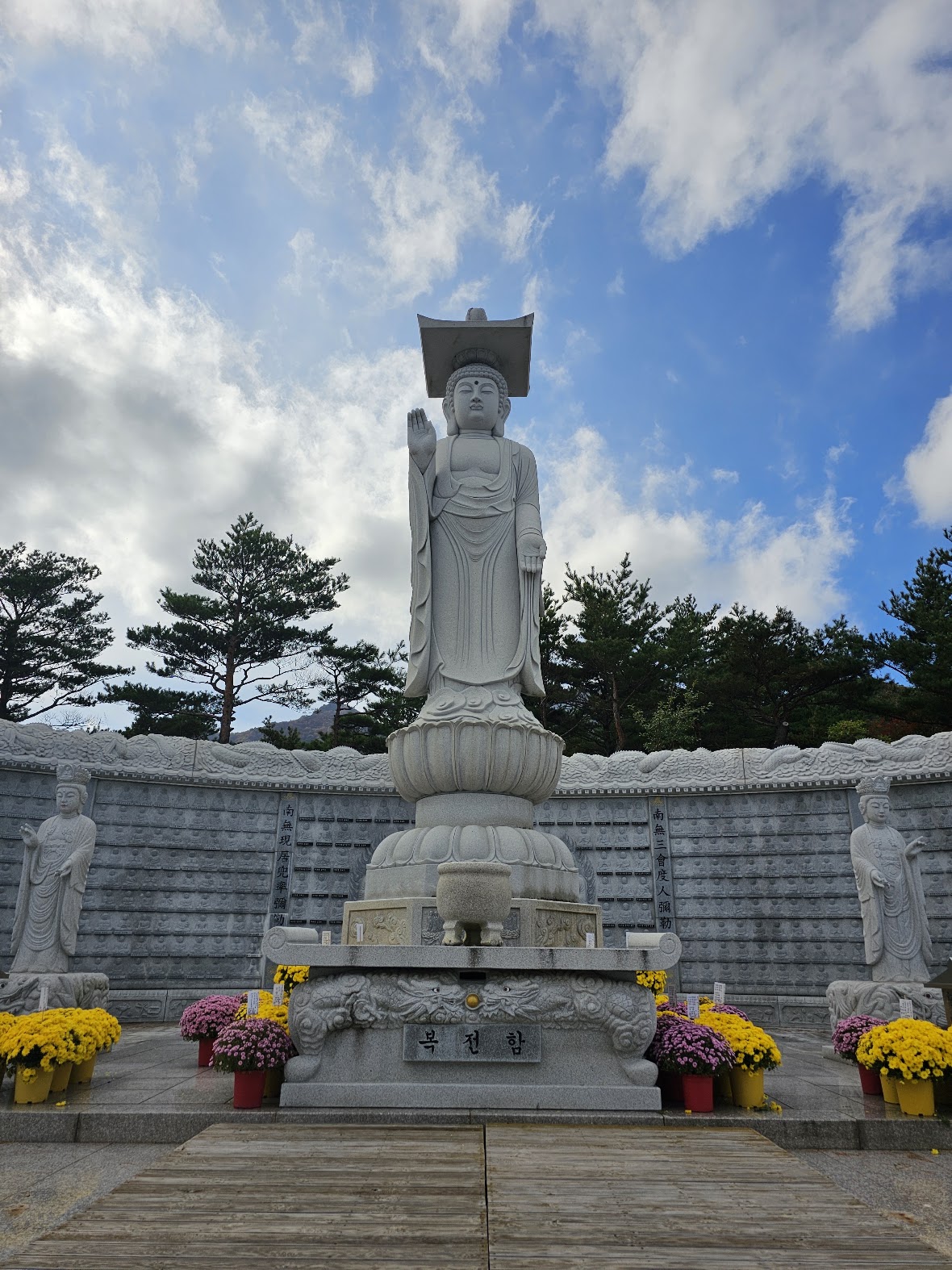
After reaching the temple, I spent a little time walking around. One stop was a shrine to Guanyin (Avalokiteshvara Bodhisattva), a short uphill walk from the main temple area. Surrounded by quiet nature, it was a peaceful place to pay respects and rest after the hike.
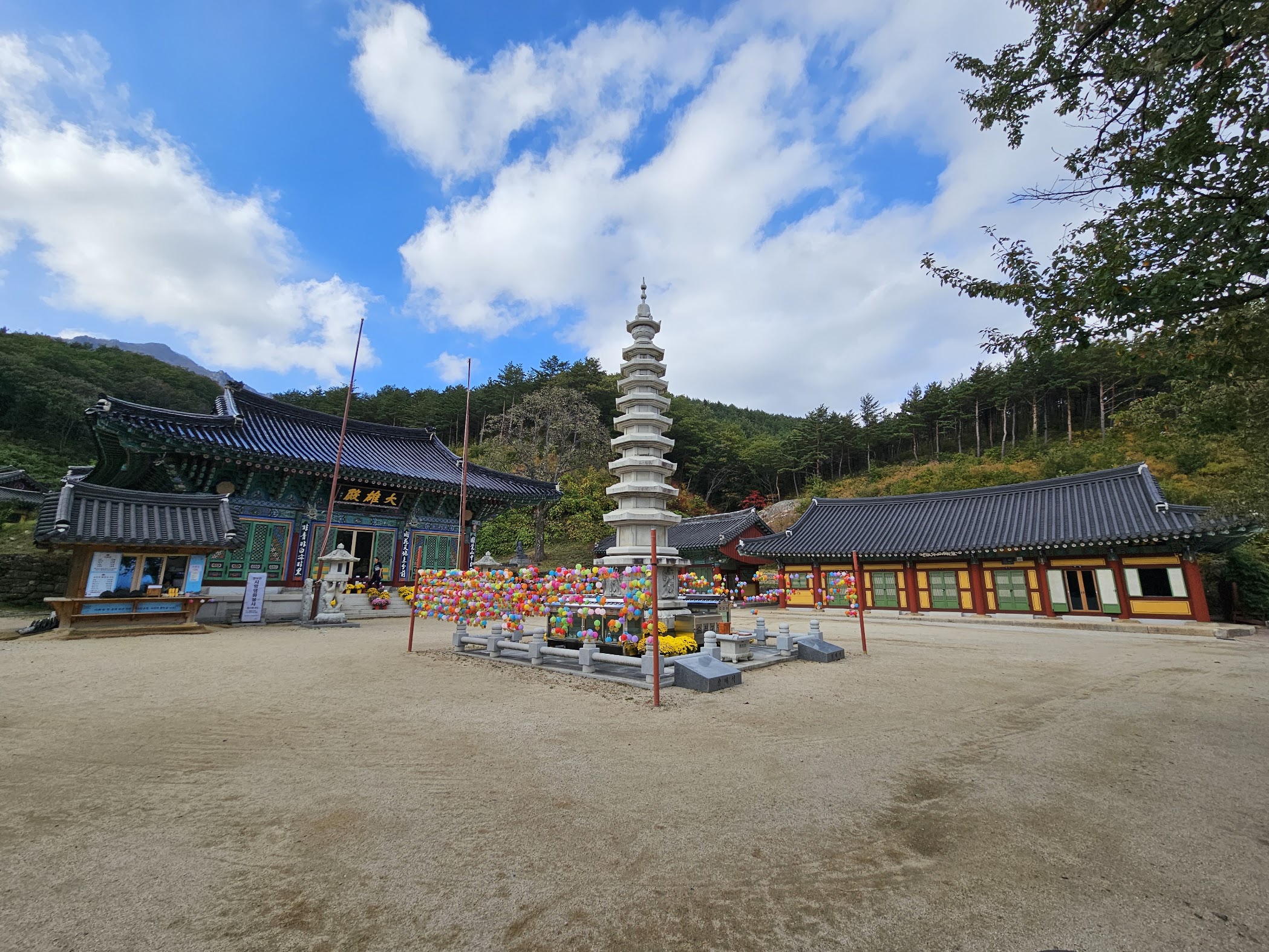
Once I’d explored the temple and the shrine, I called a taxi to pick me up at Hwaamsa and take me back to the hotel. It was a fitting end to a day of granite peaks, autumn colors, and the calm of a Korean mountain temple.
Final thoughts: Is the Sinseondae hike worth it?
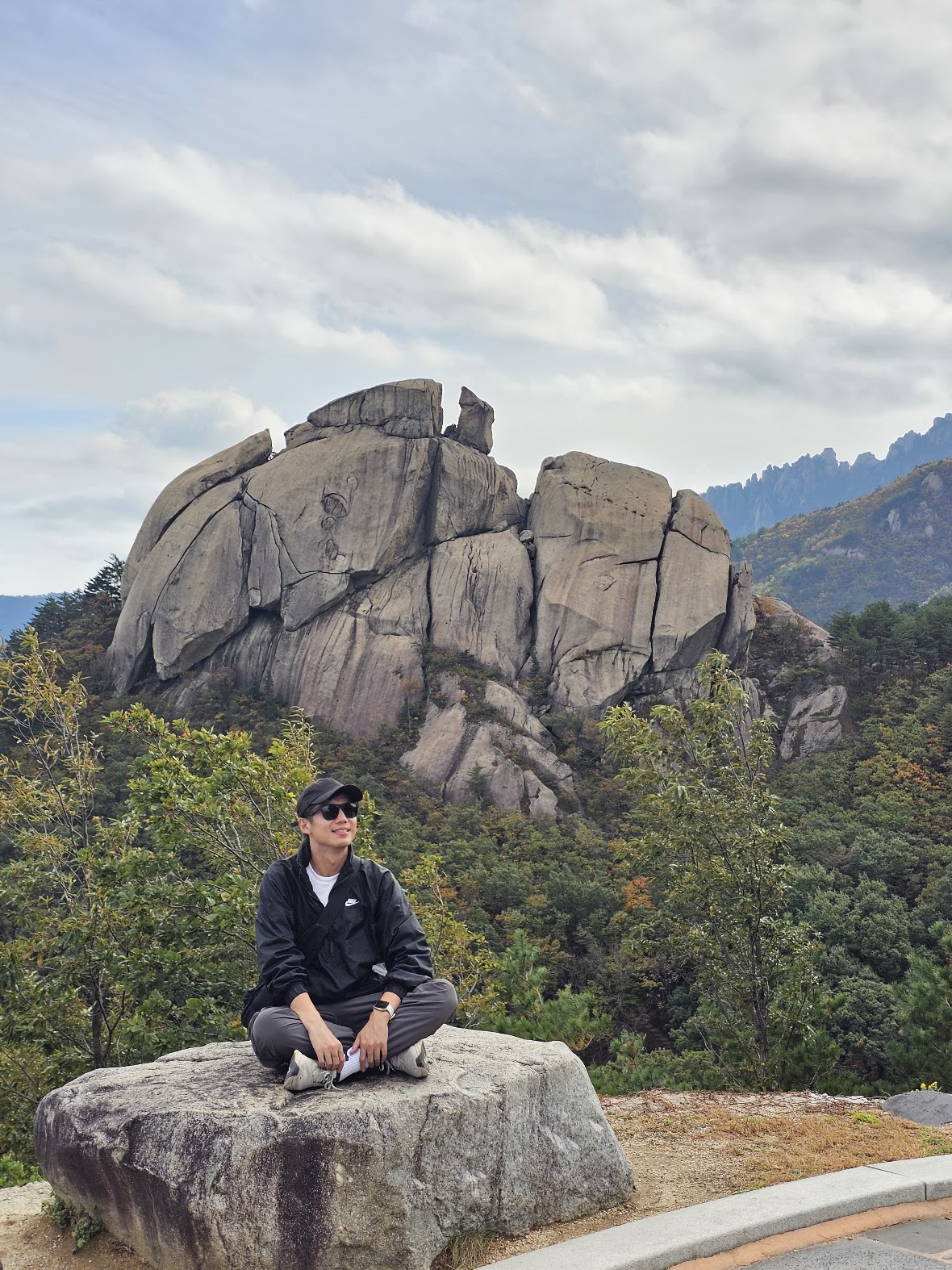
For me, hiking to Geumgangsan Sinseondae (금강산 신선대) was one of the highlights of this South Korea trip. The dramatic Ulsanbawi peaks reminded me of Italy’s Dolomites, but the trail offered much more: Subawi, the view over Sokcho and the East Sea, yellow, orange, and red leaves, and a visit to Hwaamsa at the foot of the mountain.
I didn’t find the trail overly difficult. There are uphill and steep stretches, but anyone with a reasonable level of fitness should be able to manage them. It’s also a good option for a beginner trying a hike in South Korea. Wear suitable shoes, bring water, and allow time for breaks.
Getting there was simpler than I expected. You can base yourself in Sokcho without renting a car, then take a taxi back from Hwaamsa as I did.
One important thing to check before you go: the Sinseondae trail isn’t open year-round. It closes for periods to reduce the risk of wildfires. In 2026, the trail didn’t reopen until May 16. Closure dates can vary from year to year, so check the latest notices before your trip, particularly if you’re planning to see the autumn colors.
If you’re looking for a South Korean hike that doesn’t take all day or demand advanced skills but rewards you with extraordinary scenery, Sinseondae is well worth the journey and the effort. In autumn, you get both the massive Ulsanbawi peaks and colorful forest along the way. It’s a place I’d happily recommend to anyone keen to explore Korea on foot. Happy hiking!